Know your enemy

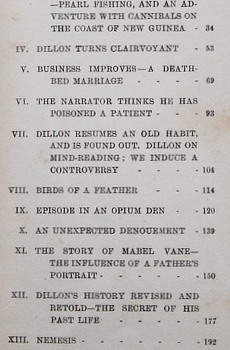
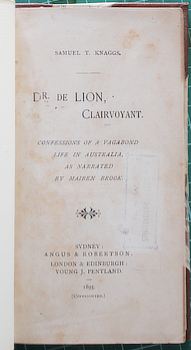
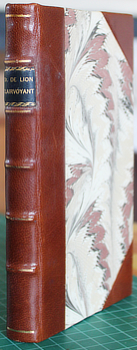
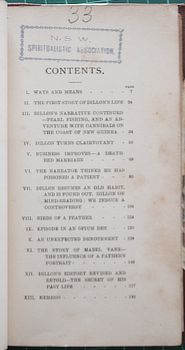
KNAGGS, Samuel T. Dr. de Lion, Clairvoyant. Confessions of a vagabond life in Australia, as narrated by Maiben Brook. Sydney, Angus & Robertson 1895. Narrow octavo, without wrapper in almost competent modern half calf. Some browning, mostly towards the ends. With several stamps of the N.S.W. Spiritualistic Association. Someone made a half hearted attempt to erase the stamp on the title but fortunately gave up before they did any damage. Au$850

Only edition of this rare novel about spiritualism. Not in a friendly way. This is his only novel but medico Knaggs was known as a strident campaigner against spiritualism so the Association shouldn't have been disappointed when they opened the book. It must have a case of knowing what they were up against.
There's not a lot about the Spiritualistic Association in the newspapers - a scattering of notices between 1898 and 1900 - which suggests it wasn't long lived. The best news about the Association is an 1898 Newcastle Morning Herald description of a meeting in which the lecturer, Mr Bradley, connected with an apparently French spirit guide who answered audience questions in broken English. Now I wonder whether the spiritualists use Knaggs' novel for tips.
Angus & Robertson published, in 1896, in the same elegant 1890s pocket format another novel that might have been more welcome:
The Clairaudient. A story of psychical research by Ernest Robin.


Email an inquiry or buy now

SHIEL, M.P. The Dragon. London, Grant Richards 1913. Octavo publisher's illustrated ochre cloth blocked in red and black. A couple of spots but a particularly good copy. Au$650

First edition of Shiel's second yellow peril novel. The first, The Yellow Danger (1898) was a success. There is a copy of The Dragon floating around that Shiel inscribed in 1924, “The fact that God has a predilection for pigtails and microbes (to judge from their number) had always struck me, and ... I was led into writing my second book on one subject ..." This was, in his view, a far better book and it flopped.


Email an inquiry or buy now

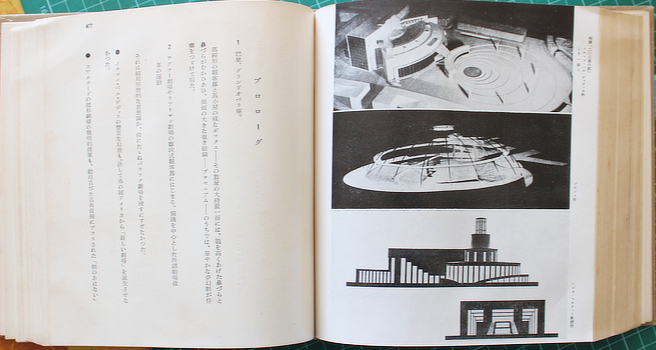
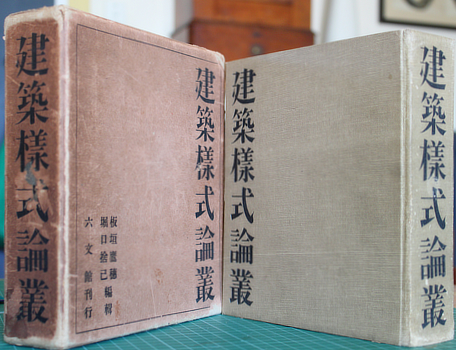
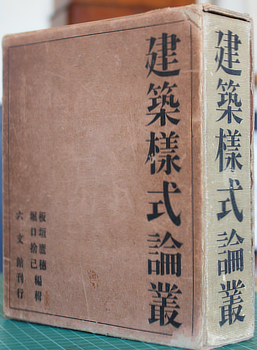
Itagaki Takao & Horiguchi Sutemi [editors]. 建築様式論叢 [Kenchiku Yoshiki Ronso]. Tokyo, Rokumonkan 1932 (Showa 7). 20x18cm publisher's cloth, printed card slipcase; 711pp, photo plates, illustrations plans and diagrams through the text. Box scraped, spine a little rubbed, minor signs of use. Au$1150

First edition of this near massive collection of writings on style in architecture put together by the indefatigable champion of modernity, Itagaki, and pioneer of modern Japanese architecture, Horiguchi. The book might be titled 'style' but there's a lot of serious thought in here by the heavyweights of the new movement in Japanese architecture.
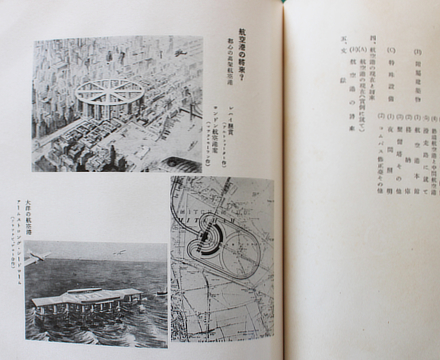
Apart from Horiguchi, contributors include Ichiura Ken, Yamada Mamoru and Taniguchi Yoshiro. Kawakita Renshichiro, who placed high in the 1930 international competition for the Ukraine state theatre, details the structure of the designs. Saito Torao contributes what appears to be a ferociously technical study of the airport in modern cities. Itagaki writes on the Roman dome and Horiguchi on the philosophy and composition of the tea room - in its way the apotheosis of modernism.


Email an inquiry or buy now

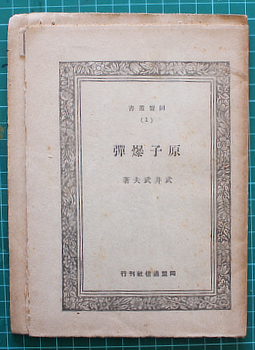
Takeo Takei. 原子爆彈 [Genshi Bakudan (ie: Atomic Bomb)]. Tokyo, Domei Tsushinsha September 1945. 21x14cm; 32pp including wrapper, folded but untrimmed. Less than usual browning of the cheap paper, rather good. sold

About a hundred years ago I decided that collecting the pamphlets and ephemera published round the world in 1945 on the atom bomb - first response so to speak - would be near as fun and profitable as raising chickens. It took me a while to discover there was anything published in Japan. For some time I found nothing in any library catalogue and that, I thought, made sense. The one people unable or unwilling to rush into print would be the Japanese after August the 6th. Of course I was wrong.
Published as Domei Sosho No.1 by Domei - the national news agency - on 20th September 1945, apparently the day before the US occupation censorship had time to be fully implemented.* Domei Sosho no.2 was on the Potsdam declaration and there, I think, the series ended. I have read that 200,000 copies of this were printed. It doesn't appear in the catalogue of the Prange collection - the world's largest collection of occupation era documents, collected by the official historian to the occupation.
There is still nothing much to be found in English on Takeo or his pamphlet. As I can best figure, the story is that Takeo was a scientific and/or political correspondent for Domei and spoke English. He and a colleague listened in to allied broadcasts, translated Truman's statement on the bombing of Hiroshima and were the first to tell the Japanese government that the "new bomb" was an atomic bomb. Takeo's widow and son published a memorial book in 1995 with background and contemporary papers which doesn't seem to have worked its way to writers in English. From my stumbling through a review of that book I get the impression that Takeo was seen as an apologist for the US and their use of the bomb which was unfair. He was attempting to give as objectively as possible as much information as he could and what information he had came only from what could he could scrape together from radio broadcasts. How much of this view of him was long after the fact I don't know. He had been or became - I'm not clear on this - a communist journalist which can't have endeared him to any authorities.
There is a modern facsimile of this which may be related to the book published by Mrs Takeo - it seems likely. That should not be mistaken for this. Neither should Takeo Takei the journalist be confused with Takeo Takei the illustrator.
*Nuclear physicist Sagane Ryokichi's Genshi Bakudan published in October had two sections removed by the censor.


Email an inquiry

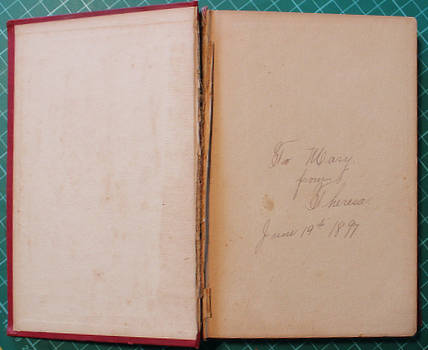
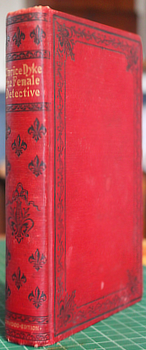
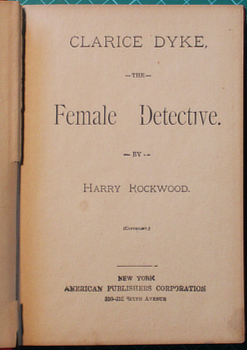
Rockwood, Harry. [Ernest A. Young?]. Clarice Dyke, the Female Detective. NY, American Publishers Corporation [189-?]. Octavo publisher's decorated cloth. Inner front hinge cracked but holding, browning of the cheap paper. Inscription dated 1897 on the front fly. Au$450

Clarice Dyke might not be the first professional American woman detective, as often claimed, but she is early. This first appeared in 1883, she first appeared in stories about her husband, Donald Dyke, the Down-East Detective the year before and quickly earned her own book.
There were maybe four or five editions, by different publishers, of this between 1883 and 1900 but none of them are easy to find.


Email an inquiry or buy now

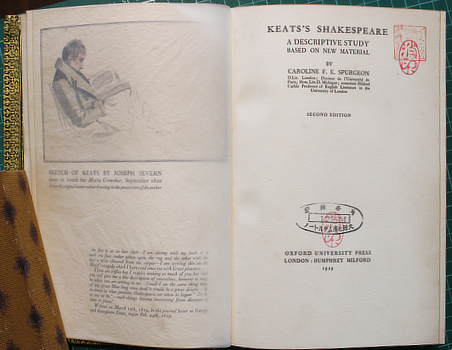
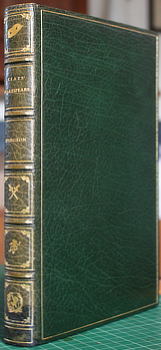
SPURGEON, Caroline F.E. Keats' Shakespeare ; a descriptive study based on new material. Oxford Univ Press 1929. Octavo gilt decorated crushed green morroco by Bayntun-Riviere; colour frontispiece, b/w plates. Japanese library stamps on the title page. Au$200

Second edition, with some corrections and additions, of this study of Keats' annotated copy of Shakespeare. I bought this from a photo because I wanted to know the story behind this extravagant binding on a piece of scholarly minutiae. In the photo it looked like a Riviere binding to me. The Japanese bookseller was short on detail, including the library stamps and the binder, but I was sure there had to be something to indicate who had this bound and why. There isn't.
Spurgeon is interesting enough, the first woman professor at the University of London, a campaigner for women in universities, author of the still regarded book on Shakespeare's imagery, and now something of an airbrushed cover girl for the magazine Your Ex.


Email an inquiry or buy now

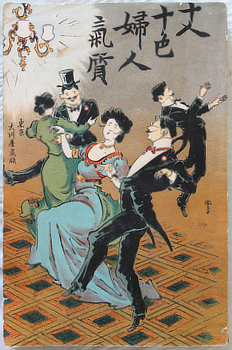
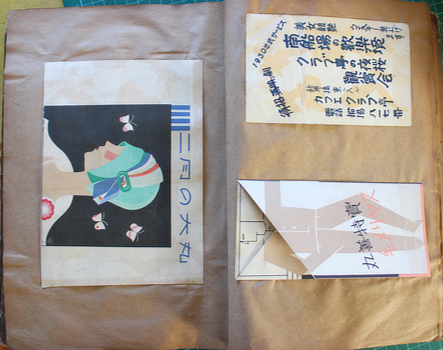
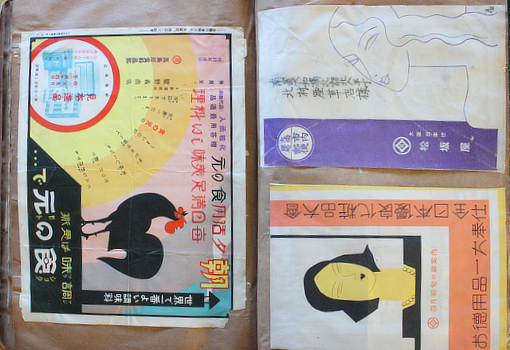
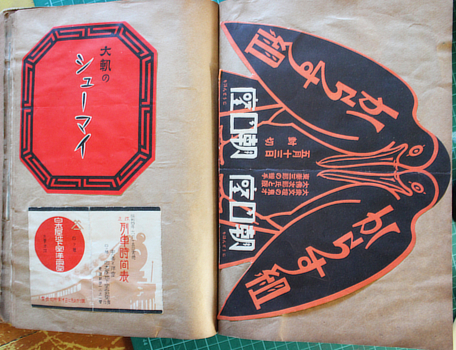
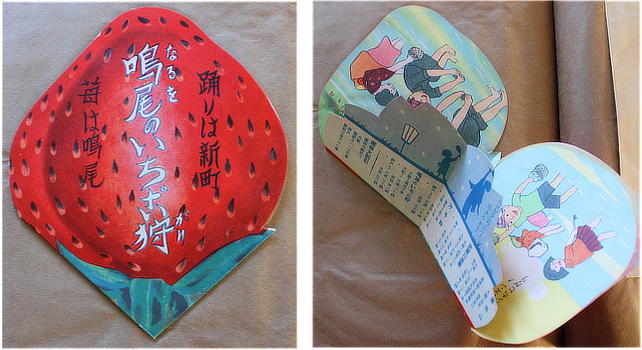
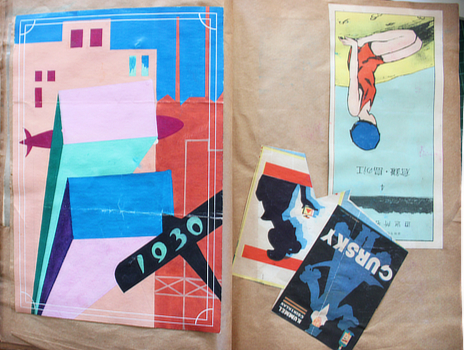
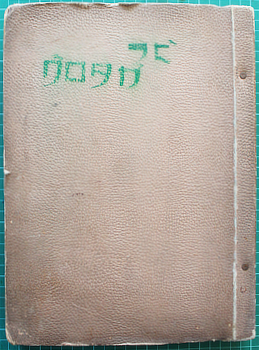
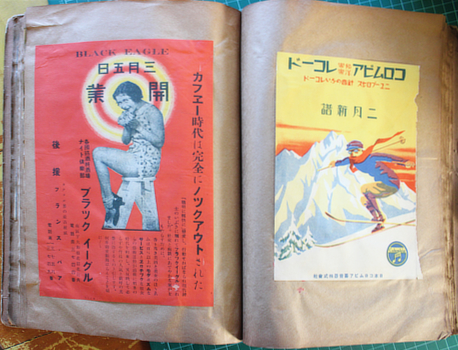
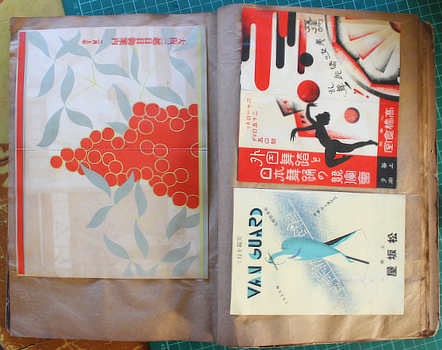
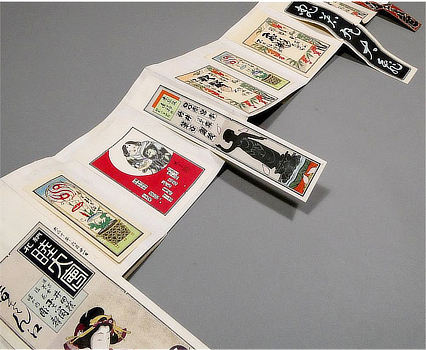
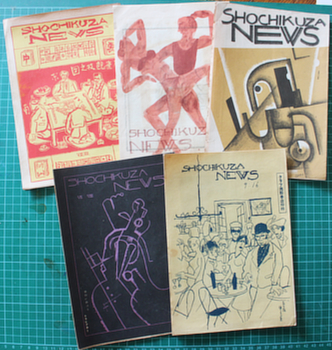
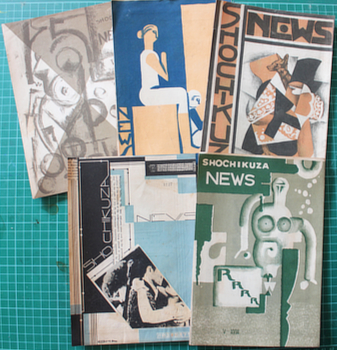
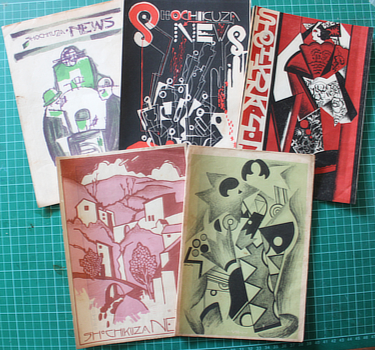
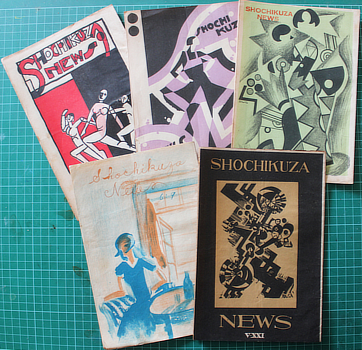
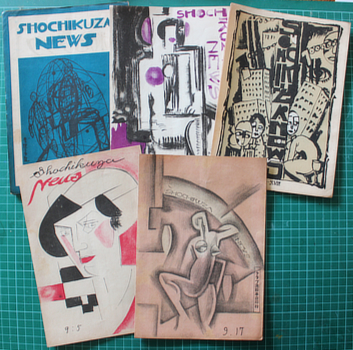
Shochikuza News. Osaka, Shochikuza 1925-1929. 38 issues 22x15cm publisher's colour illustrated wrappers; mostly four pages and covers. Minor signs of use. Au$2900

A well chosen group. Shochiku, now part of the megafauna of the entertainment industry, spread into film from Kabuki in 1920, built Japan's first western theatre in Osaka in 1923, and soon had a chain of cinemas showing foreign movies. This was their weekly news letter. I think the cover was shared but the contents were printed for each theatre. Inspired and aspiring young designers presumably worked on the usual terms: no credit and less money. There is quite a bit of remarkable anonymous graphic art of the twenties and early thirties with the Shochikuza banner. Not all of it is good but what is can be fabulous. As the thirties progressed the adventurousness evaporated and by the mid-late thirties they looked like film magazines from anywhere.
Here we can identify the artist of some. Those signed Shin or 伸吉 are by Yamada Shinkichi who started in Shochikuza's publicity department in 1922 and worked his way up to set and costume designer. There are ten here.


Email an inquiry or buy now

A malicious fraud

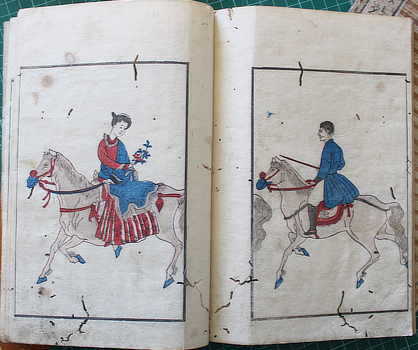
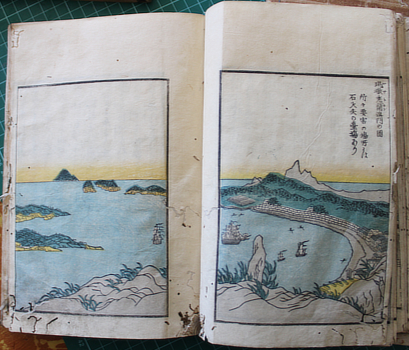
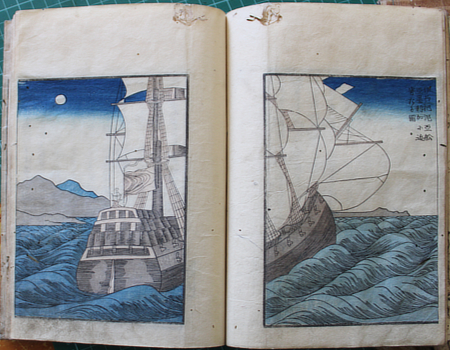
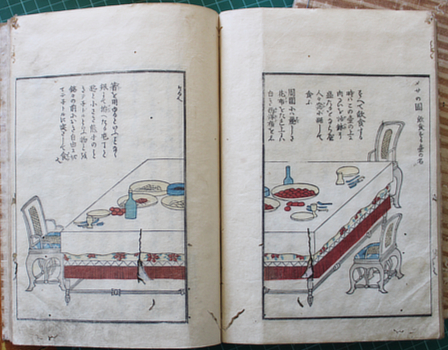
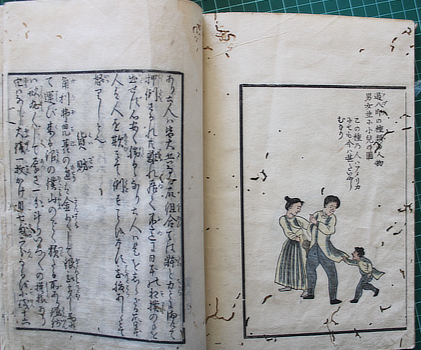
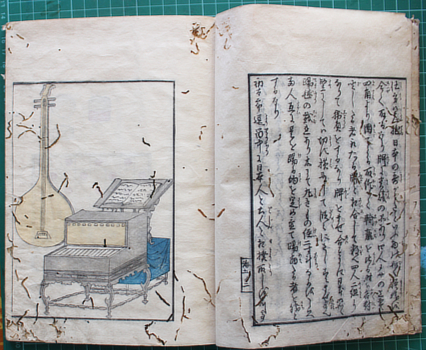
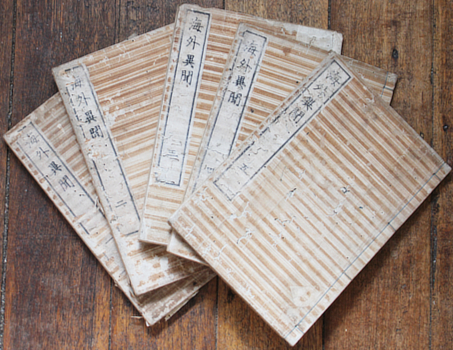
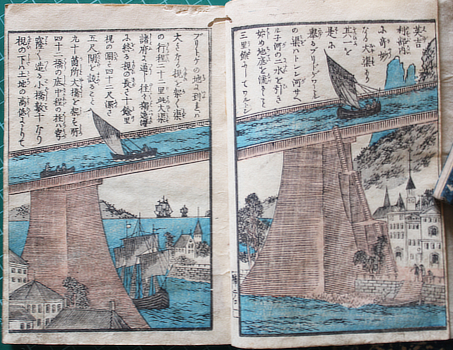
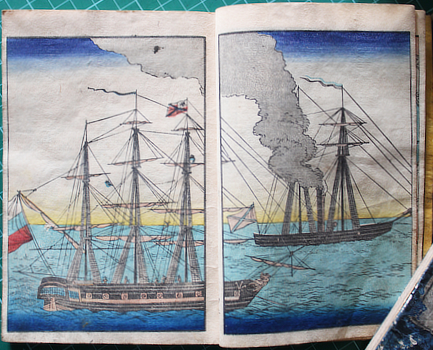
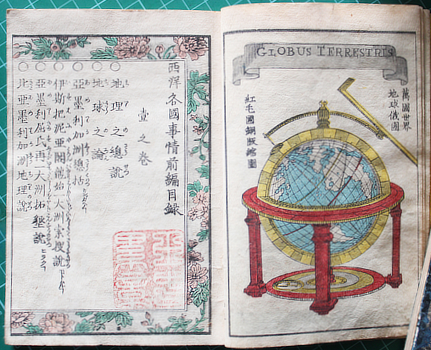
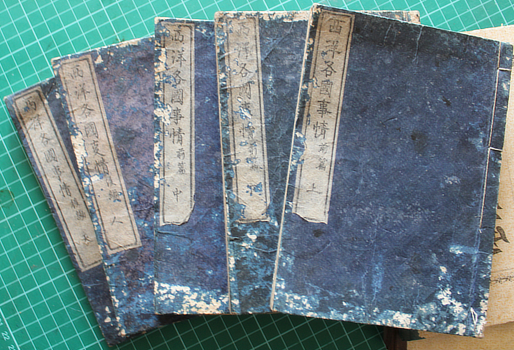
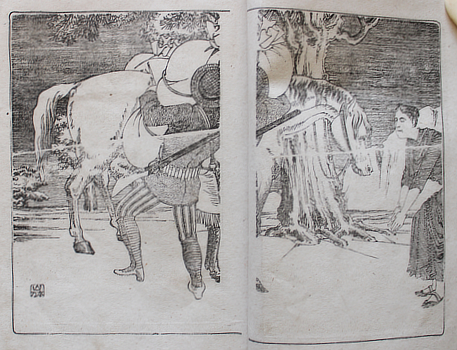
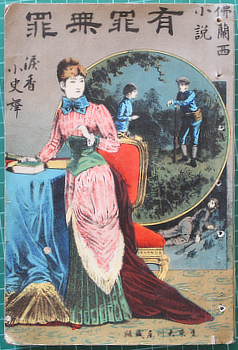
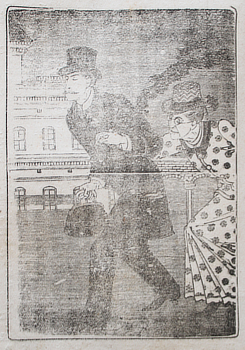
Fukuzawa Yukichi (but not). 西洋各國事情 [Seiyo Kakkoku Jijo]. (First series & two thirds of the second). Naniwa (Osaka), Nishobo [1868?]. Five volumes 18x13cm, publisher's wrappers with printed title labels (cover surfaces somewhat nibbled but not chewed); 26 colour woodcuts including two double page and one four page views. Signs of use, a marginal stain in the bottom margins of early pages in the third volume of the first series; pretty good. Au$1850

Fukazawa was a member of the first Japanese embassies to the United States, in 1859, and Europe, in 1862, and his 'Seiyo Jijo' (Things Western), the most important and influential Japanese study of western nations of the period, was published in parts betweeen 1866 and 1870. It was such a best seller that piracies, fakes and spin-offs soon appeared. This is one of those fakes but it is, thanks to the illustrations, far more appealing than the original.
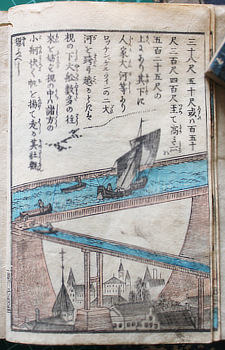
The foreign ships and Russians are charming but not so remarkable, the flags are flags whether or not they actually exist, but the western handwriting is mysterious and intriguing and the four panel view of a massive canal towering high over a port city must be one of the best imagined architecture renderings of all time.
The first title page claims Fukuzawa Sensei as author. Highly malicious and fraudulent says the introduction to Keio University's online version of the real Fukuzawa book. There we're told this was pillaged wholesale from an 1845 book,' Seiyo Jin Senjutsu Yakuhon', writer unknown. This is at least partly true. From the fragmentary records of that book I can find I confirm that it's likely flags come directly from there and I found sections of text that seemed the same, though recut. But flags were constantly copied from one book to another and as for the good pictures ... I haven't found that city anywhere else.
A note in the Union Catalogue entry says the text is from Mitsukuri Shogo's 'Kon'yo Zushiki' (1847) but looking through Waseda's online copy of that left me baffled.
This is the second copy to come through here but until I found this copy (a 13 years search) I had no clue there was a second series. It seems pretty definite that six volumes were produced but I can't find a record of anything in Japan but the first three volumes. That is the Kobe University copy illustrated in the Union Catalogue. What we have here is the presumed first series: upper, middle and lower volumes, which are divided into five parts; and two volumes of the second: heaven and people, which have parts one, four and five. So there should be a middle - earth - volume with parts two and three. An early owner, as was common, has written a short title on the bottom edges with volume numbers one to six, no five of course.
Fukuzawa asked the government in 1868 to uphold the law, ban the counterfeit editions and frauds - he listed this book among them - seize the blocks, confiscate their profits, and hand them over to him. I doubt this happened but it does seem to mark the first concept of copyright in Japan.

Email an inquiry 

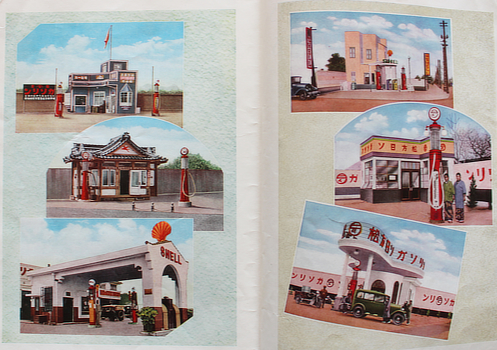
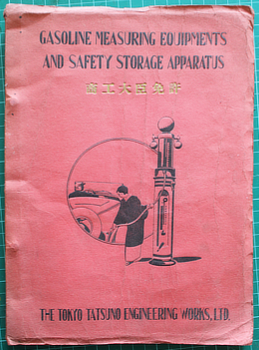
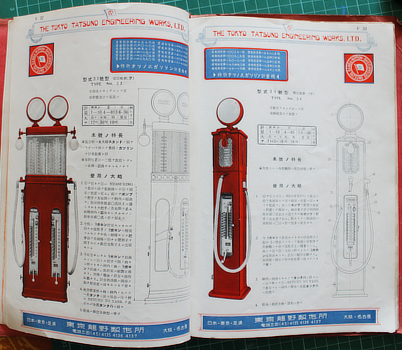
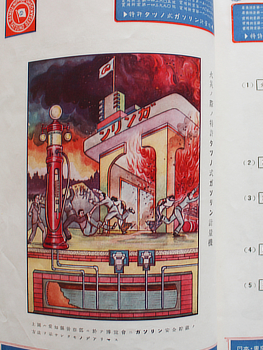
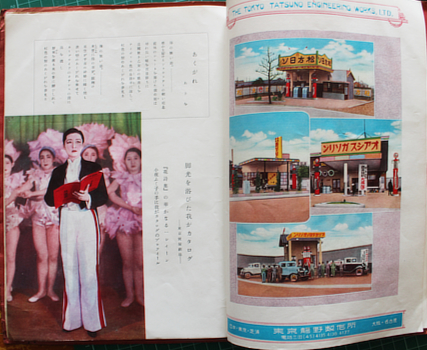
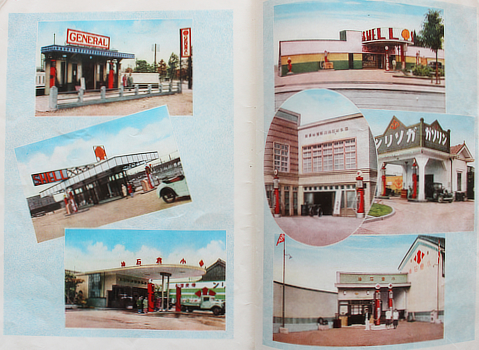
Catalogue - gasoline pumps. Tokyo Tatsuno Engineering Works. Gasoline Measuring Equipments and Safety Storage Apparatus [sic]. The company c1933. 28x20cm publisher's printed wrapper; 68,[8],[16]pp, illustrated throughout, several pages in colour. Used, some creased corners but most acceptable. This opens right to left with a title page, in English, at the other end for those used to starting there. Au$475

If you had the idea to open a gas station in Japan Tatsuno was the obvious place to go for everything you needed, from underground tanks to an air pole for tyres. They are still going (still run by a Tatsuno) and their company history is a long list of world firsts, starting with Japan's first fuel dispenser in 1919.
This would be an exemplary catalogue in any case but it is lifted to another level with those 16 pages at the end with vivid colour photographs of 40 service stations around Japan. This section is introduced by Takarazuka star Fukoko Sayo, backed by a chorus line, holding a Tatsuno catalogue. Why? Tatsuno didn't know either.
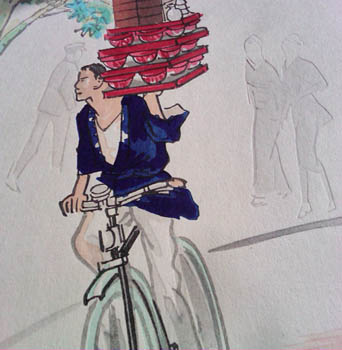
The front cover and several illustrations make it clear that running a service station was a respectable occupation for women.


Email an inquiry or buy now

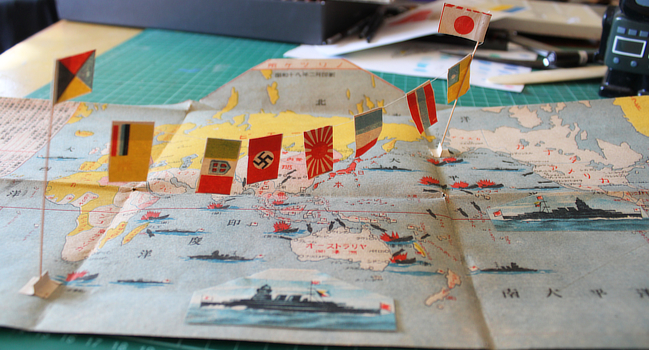
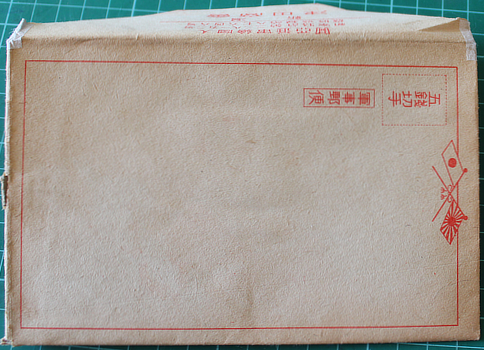
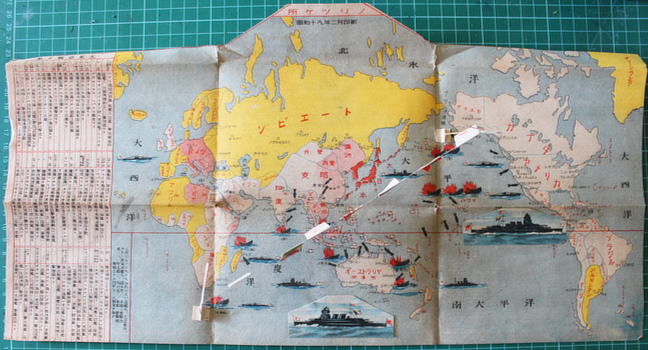
Paper toy letter. 興亜進軍絵図入 [Koa Shingun Ezu Iri]. February 1943 (Showa 18). Colour printed letter form (24x45cm) with the form on one side and the colour map and details on the other. With the row of nine miniature flags strung together between two flag poles, intact and folding up and down as intended; two destroyers that hinge upright. Signs of use, pretty good. Au$200

An irresistible gimmick for soldiers to send home. Those old enough to remember aerogrammes and similar letter forms will know how this works. The letter is written on the lined side and it all folds and seals to be a post paid letter. What's special here is the map showing the advances made by the Japanese up to February 1943 - and their allies - with bombs and sinking ships dotting the Asia-Pacific. The flags, including Japan, Germany, Italy and Manchukuo, attached to the poles and the poles to the letter, flutter across half the world while their ships roam the seas.
The National Library illustrates their copy, dated May but apparently identical otherwise, as was a copy dated June which went through here a few years ago. Across the letter side is lightly printed 撃ちてし止まむ - uchiteshi yaman - which is translated differently in every reference I find, including 'fight without quarter', 'shoot and never stop shooting', 'smite and be done'. Taken from a Sato poem, it became a national slogan and a film.
These are not so hard to find but finding one with everything still there and in place is not so easy.


Email an inquiry or buy now

Breaking the law

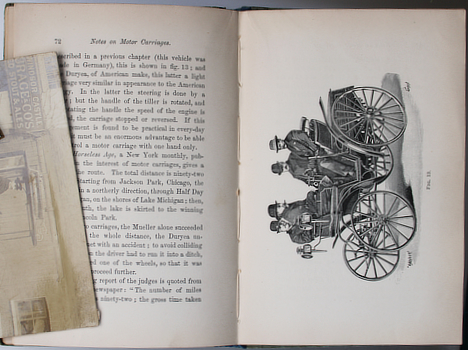
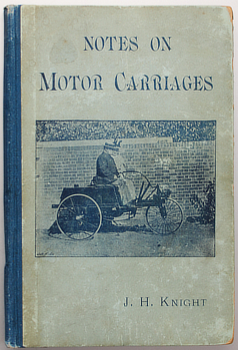
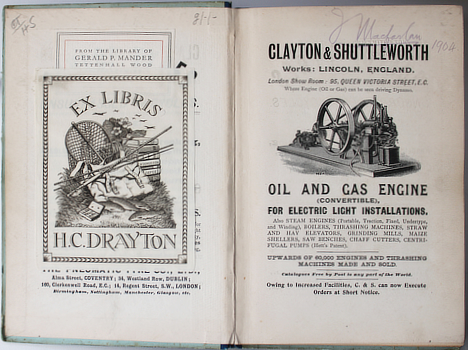
KNIGHT, John Henry. Notes on Motor Carriages with hints for purchasers and users. London, Hazell &c 1896. Octavo publisher's cloth backed illustrated boards (a bit rubbed & worn at corners); 84pp, illust with cuts & photo illustrations. Minor signs of use, a pretty good copy. Au$900

Only edition? Just about the first book on cars written for the English everyman. Engineer Knight was the motor car equivalent of a suffragette. I don't think he hurled bricks but in 1895 he did, with willful disregard of the law, take to the highway in his own motor car without a license and a man to walk in front with a red flag. He and his fellow reckless hoons got the red flag act repealed not long after he wrote this. In the last passage he hopes the law will change in time for the planned October 1100 guinea road-carriage competition. It happened in November.
I read somewhere that this was the first automobile book added to the Detroit Public Library - in 1896 - the beginning of their self proclaimed "premier" auto collection.


Email an inquiry or buy now

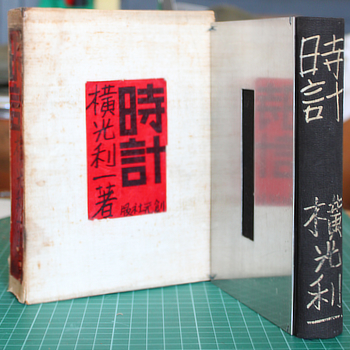
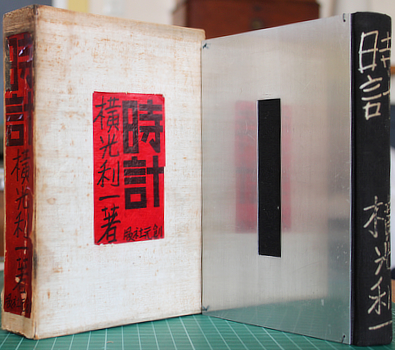
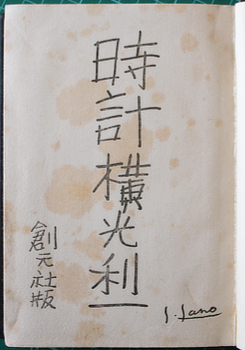
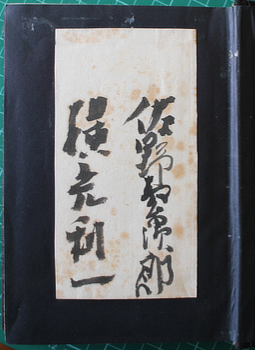
Yokomitsu Riichi. 時計 [Tokei]. Tokyo, Sogensha 1935 (Showa 10). 20x14cm publisher's black cloth with mounted aluminium panel on the front; cloth covered slipcase with printed labels (cloth browned, knocked, used but solid). Aluminium panel with light scratching; white spine lettering a bit rubbed Some browning; a very good copy for this book. The aluminium panel, tied on with thread is often missing, usually battered and scratched; the spine is usually disintegrating with the white lettering gone. A sheet of paper signed by Yokomitsu Riichi and Sano Shigejiro mounted on the front fly. Au$650

First edition; there were plenty more but not with this fabulously impractical binding. Yokomitsu was proclaimed a god of literature around 1930. At first mocking, it soon was used earnestly by his fans. Judging by his photos he could well have been a rock star in later generations. His friend Kawabata Yasunari wrote in 1933 that (crudely translated) "the chorus of praise by young people sounds like a song that might enshrine him in the hall of misfortune". His writings during the war earnt him the title of literary war criminal but he didn't live so long anyway.
The cover is by Sano Shigejiro, painter and prodigious designer of covers for some fifty years from 1930 on. He was a friend of Yokomitsu and did the covers for a few of his books. He apparently studied with Matisse and hung out with Miro in the late thirties.


Email an inquiry or buy now

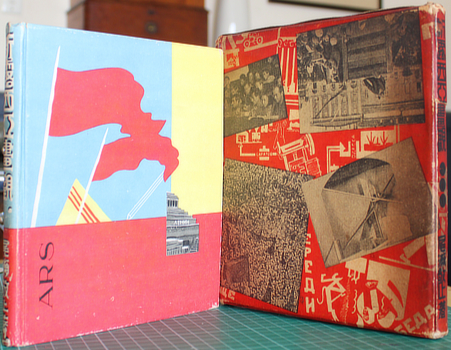
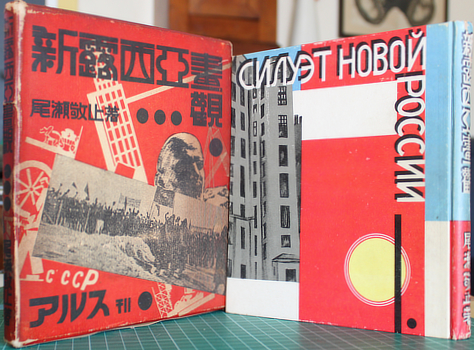
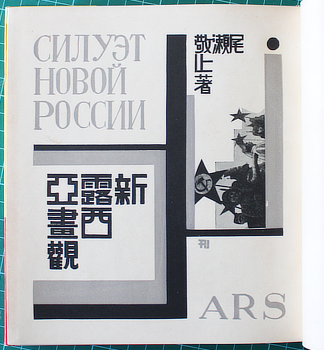
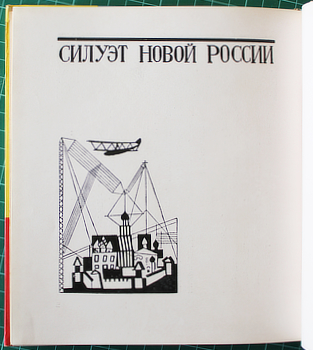
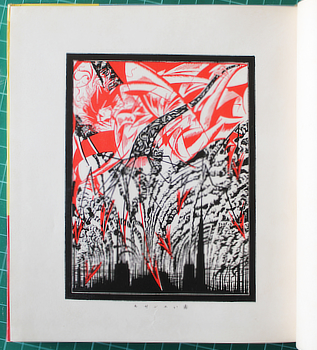
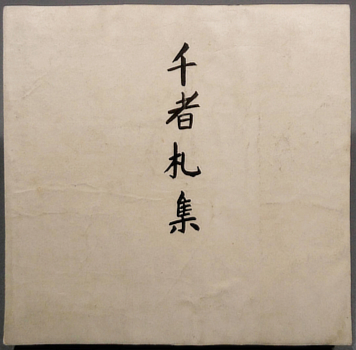
Ose Keishi & Onchi Koshiro. 新露西亜画観 [Shin Roshia Gakan]. Tokyo, Ars 1930 (Showa 5). 20x18cm publisher's colour illustrated boards and illustrated card slipcase; numerous photo illustrations, other illustrations and decorations, one full page in red and black. Box browned, used but solid; spine tips a touch rubbed; a nice copy. Au$750

First edition. Ose was an industrious reporter and interpreter of all things Soviet for Japan. I didn't see this in Hokkin Hon (Banned Books) but of course he has other entries.
The design is by Onchi Koshiro. Onchi has plundered constructivist sources and photo-montage but has - as often - made it his own and Japanese.


Email an inquiry or buy now

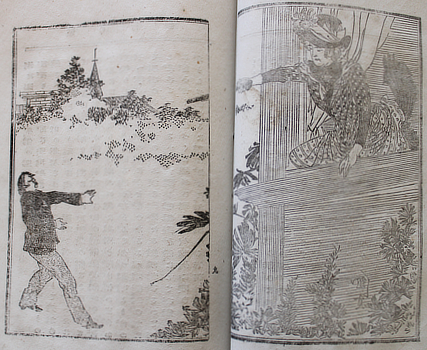
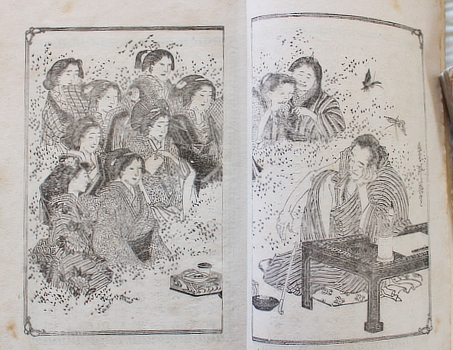
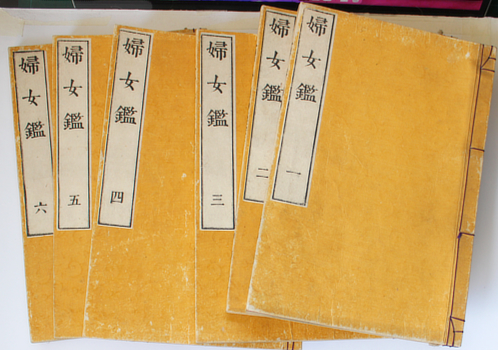
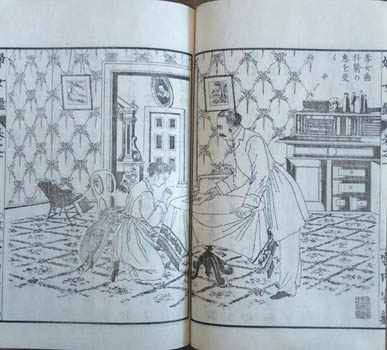
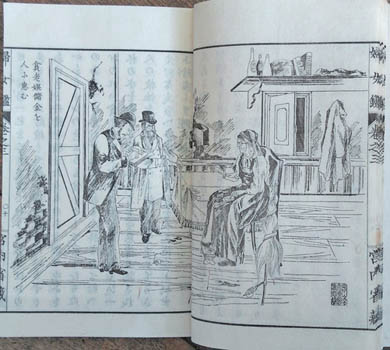
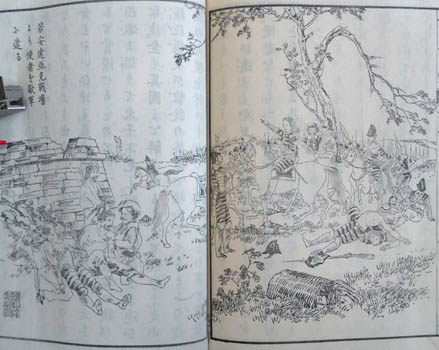
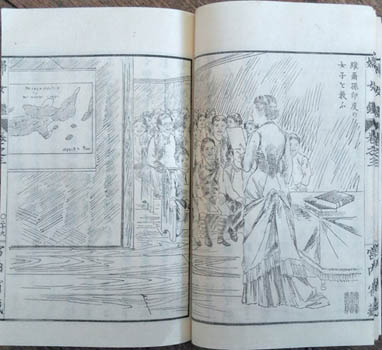
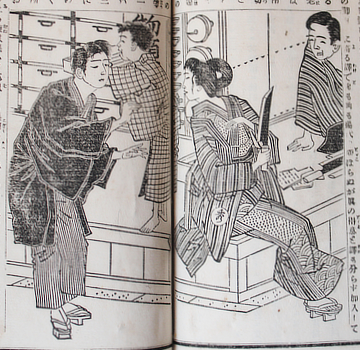
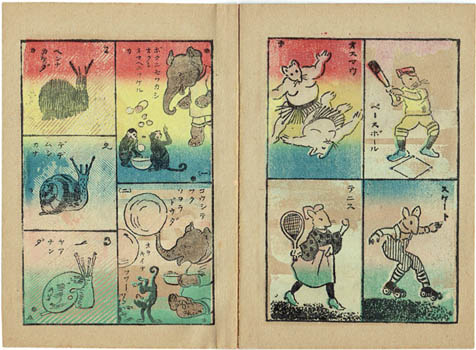
Nishimura Shigeki and others. 婦女鑑 [Fujo Kagami]. Tokyo, Kunaisho 1887 (Meiji 20). Six volumes 23x16cm, publisher's wrappers with title labels; double page page woodcut illustrations. An excellent set. Au$375

First edition of this official piece of moral education for women: the lives of inspiring women around the world. It was republished well into the 20th century. Moral philosopher and scholar of things western, Nishimura tutored emperor Meiji on the West. Apparently this book had some influence on the choice of Nishimura to head the Peeress's School the following year.
It is a monument to self denial and sacrifice on the part of women - clear enough from the illustrations - not much different from similar books for girls anywhere in the world but that it is deeply Confucian. Looking at the remarkable likeness of descriptions of this book by modern historians I wonder who read it and who just read each other.


Email an inquiry or buy now

HEALEY, Daniel. The Seven Christians Of Championdom - A Tale of the Times. Written, and published for and by The Author, Sydney ... 1885. 26x21cm original half cloth & marbled boards with gilt on black title label (wear to tips and edges, label quite rubbed); 152pp. Printed from handwriting by some kind of duplication or autolithography. Bookplate recording its gift from John Lane Mullins to St Sophia's Library. Au$1200

Singular, eccentric ... all the usual labels apply to this distopian, or at least satirical, romance of the city of Yendis, capital of Champiana. Daniel Healey might be better known as author Whaks Li Kell but it's unlikely. That's the painful pseudonym he used for his other known book, 'The Cornstalk, his habits and habitats' (1893), in which his target expanded from Sydney to the colony of New South Wales.
This did receive a cruel notice in The Bulletin (August 1 1885) but it was written with a hand as heavy on the wit lever as Healey's by someone who would rather be cute than intelligible. It's hard to figure out exactly what the reviewer is mocking. Elsewhere I find a Daniel Healey was an unsuccessful independent candidate for the inner city seat of Sydney-Cook in 1898 and an unsuccessful Labor (possibly) candidate for Sydney-Bligh in 1901 - which sounds like our author - but there were a lot of Daniel Healeys.
How many copies of this were produced is unknown but I'd suggest the four copies found by Trove plus this one must be a noticeable percentage. The only copy I've found sold in recent decades was this same copy.


Email an inquiry or buy now

Asian labour in Queensland. Eleven parliamentary papers relating to the introduction of Chinese or 'Coolie' labourers from India: Asiatic Labour ... 1861; [with] Asiatic Labour (Despatches relative to.) ... 1861; [with] Coolie Immigration (petition in favor of.) ... 1861; [with] Chinese and Coolie Immigration ... Petition ... 1862; [with] Coolie Immigration. (Petition.) ... 1874 [with] Immigration of Chinese and Indian Coolies ... 1875; [with] Coolie Immigration. (Petition.) ... 1882. [with] Labourers From British India. (Further Correspondence ...) 1883; [with] Correspondence respecting Proposed Introduction of Labourers from British India ... 1884; [with] Labourers from British India (Further correspondence ...) ... 1884; [with] Labourers From British India. (Further Correspondence ...) 1884. [with] Labourers From British India. (Further Correspondence ...) 1885. Brisbane, Govt printers 1861 - 85. Foolscap, stitched, stapled or loose as issued; 4pp on three leaves; 15pp; 1pp; 1pp; 1pp; 17pp; 1pp; 13pp; 16pp; 4pp; 1pp; 4pp. One of the single leaf petitions a bit ragged round the edges. Au$650
More than 70 foolscap pages of depressing reading as the landowners of Queensland seek to introduce the cheapest possible labour while the rest of white Queensland seeks to keep them out. Just by the way, was it cheaper to buy and keep a slave or import indentured labour? A good field hand in antebellum America was a serious investment. By the 1880s it becomes apparent that Queensland governments seek not to offend powerful landowners nor risk the outrage of an electorate confronted with unwhite immigrants; they are busy sidestepping.
The early petitions make the point that it would be "unjust, even if it were practicable" for any Anglo-Saxon to "perform field labour under a tropical sun" while a thriving Queensland cotton industry stocked with Coolies would go a long way toward the abolition of slavery elsewhere.


Email an inquiry or buy now

SLADEN, Douglas. Fair Inez. A romance of Australia. London, Hutchinson [1918]. Octavo publisher's cloth; 16 page publisher's list for spring 1918 at the end. Minor signs of use and some spotting or browning, a pretty good copy. Inscribed affectionately and signed by Sladen in June 1935 to "Dorothy ... another English soul who married an Australian." A small pencil note on the front paste down suggests that Sladen paid 2/6 for this copy in April 1935. If so, he's not the only author to buy their own books to give away. Au$400

First edition of this futuristic fantasy which opens in the year 2000 with the great airship Murrumbidgee from London coming into land at Melbourne. Returning home is Pat Lindsay Gordon, son of Adam Lindsay Gordon IV and great-grandson of Adam Lindsay Gordon II, in turn the grandson of a cousin of the revered poet. The Gordons obviously breed hard and fast. His sister Inez will doubtless be the femme fatale of the book. Read on yourself.


Email an inquiry or buy now

[STRETTON, Julia Cecilia]. The Valley of a Hundred Fires. London, Hurst & Blackett 1860. Three volumes octavo contemporary half roan. Minor spotting and signs of use; a pretty good and neat set in what looks a colonial binding. Au$350
First edition. Mrs Stretton - not to be confused with Hesba Stretton - was one of the league of plucky women who took to writing to support their families after their husband dropped dead or deserted them in a welter of drunken cruelty, loose women and gambling debts. In her case she began as the widow de Winton (she was born Collinson) and carried on after she married Mr Stretton. This Wales set novel is apparently based on her own family, the heroine is her mother. Sadleir apparently ignored Mrs Stretton; Wolff had a couple of her novels but not this one.


Email an inquiry or buy now

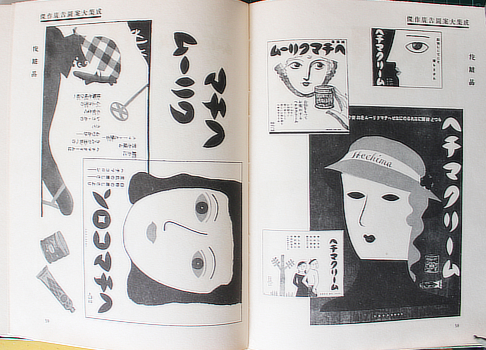
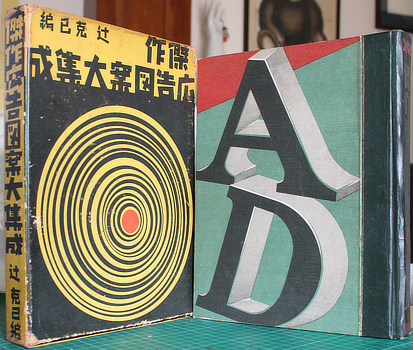
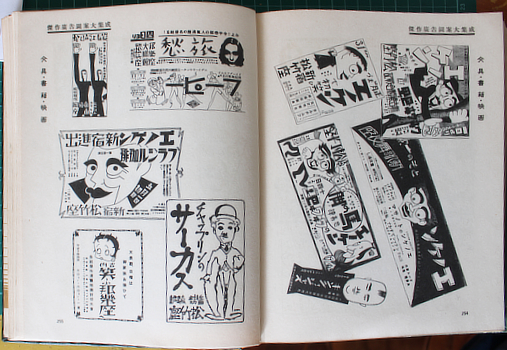
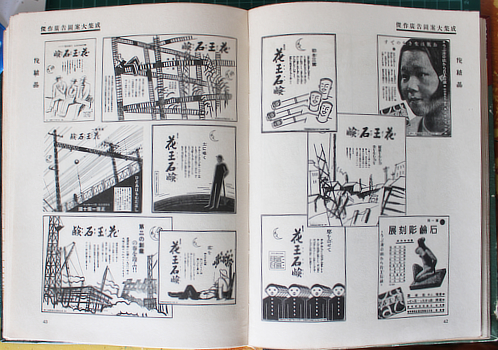
Advertising. Katsumi Tsuji. 傑作廣告圖案大集成 [Kessaku kokoku zuan daishusei]. Tokyo, Kobunsha 1934. 27x20cm publisher's illustrated cloth, illustrated slipcase; 320pp with hundreds of illustrations (eight pages in colour, the rest in varying monochromes). A mildly fatigued copy, used but nothing in particular. Au$350

A splendid compendium of modern advertising layout and typography; there are examples from Europe and America but fortunately the bulk is Japanese. Both the book cover and the slipcase are pretty smart, the slipcase in particular. The 'AD' design on the cover of the book is a direct link to the Art Directors Club, presumably this is a forerunner of the current Tokyo Art Directors Club.


Email an inquiry or buy now

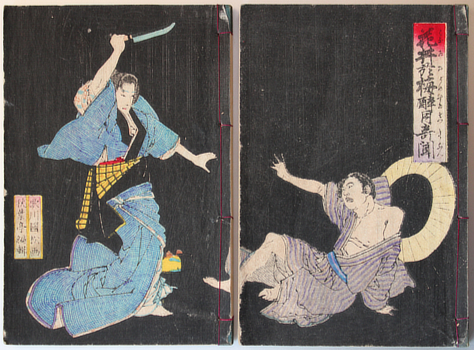
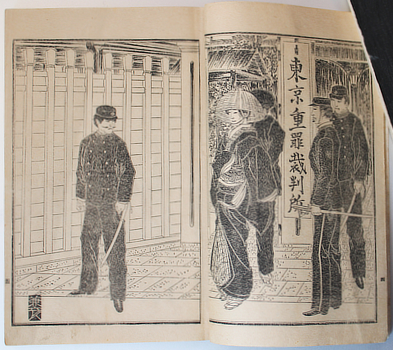
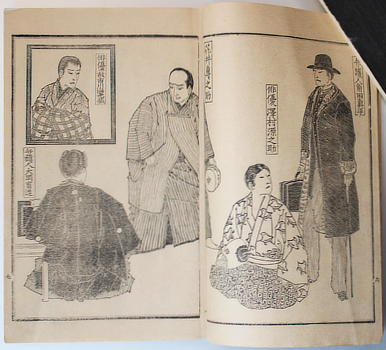
Hanai Oume. Shuyotei Sofu. 花井於梅 粹月奇聞 [or 花井お梅 酔月奇聞] [Hanai Oume Suigetsu Kibun]. Tokyo, Ishikawa Denkichi December 1887 (Meiji 20). Two volumes 18x12cm, colour wood covers by Utagawa Kunimatsu; two double page, two single illustrations at the front, four large illustrations through the text. A pleasing copy. Au$500

One of the prizes of the dokufu craze of the early Meiji. Dokufu - poisonous women - are nothing new of course but the happy conjunction at the advent of mass circulation newspapers of a beautifully timed series of murders by unvirtuous young women set the sensation mongers and their readers all of a fever. Newspaper to book, lurid print to kabuki and back again, dokufu were all the rage for a couple of decades. Along the way crime fiction was born and, in a way, modern Japanese literature.
Hanai Oume earned her place as one on the trinity of great dokufu for the murder of her employee for helping her sponging father muscle her out of her business - the teahouse Suigetsu. The famous umbrella was part of her defence.
Of course nothing about cheap popular trash like this is going to be straightforward. The colophon here tells us this is a reprint but lists the first as November 1887 which must be a newspaper appearance. Keio university's copy which uses the same covers is a different printing from a different publisher (Mizuno Ikutaro) with a colophon listing nothing before December while Yamanashi University's copy, published by Yamazaki Matasaburo and dated the same day as Keio's, is yet another different printing with a different cover. None of this is helped by the book being titled by both variants in the same copy.


Email an inquiry or buy now

🛒 0 — View Cart

Your Cart

Your cart is empty