These books haven't necessarily been uploaded to antiqbook yet so if you order through antiqbook and get a message claiming the book has been sold email in case that isn't true.

As seen in the Murrurundi Times
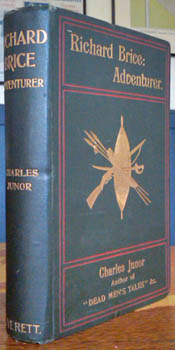
JUNOR, Charles. Richard Brice, Adventurer. London, Everett 1902. Octavo publisher's decorated cloth blocked in gilt and maroon. Minor signs of use, a rather good, bright copy. Au$2,100
First edition of Junor's other book and rare; missed by Miller and Macartney and by Loder. Not the first appearance, a version was serialised with the title A Ruby from the Sea in The Murrurundi Times and Liverpool Plains Gazette from March to November 1901. Junor's first book was, of course, Dead Mens' Tales of 1898 and as he fell off a Sydney ferry and drowned while this was in the press there were no more.
Junor has aimed at an international market while keeping one foot in the home camp. The hero and narrator is Australian born but brought up in Argentina. Finding himself on the run after a misjudged coup d'etat he decides to head for London and then on to Australia. Manila is as close as he gets and long before he gets that far he has been through a multitude of perilous scrapes, subterfuges and double crosses.
A search of all the likely catalogues finds copies in the four English deposit libraries and one belonging to the Mormons in Utah.
You can email an inquiry or order securely through antiqbook
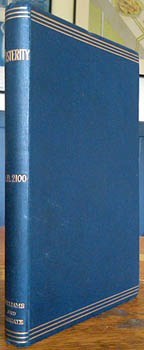
[NEWTON, Alex]. Posterity: Its Verdicts and Its Methods Or Democracy A.D. 2100. London, Williams & Norgate 1897. Octavo publisher's navy cloth. Some spotting of the first and last few pages; a bright copy. Inscribed "with the author's compliments." Au$175
Our narrator, sick of life, luckily has a mad scientist friend - something we all want - needing a guinea pig for his new suspended animation machine. Cut to the year 2100 and I'm not sure whether Newton is describing Utopia or Dystopia. I find it rebarbative but I'm not sure Newton saw it that way. The future is very Anglo more than British. The English language has become the lingua franca of business and science and America, Australia, South Africa and Canada have risen to be economic and cultural powers, but Britain remains the heartland. I noticed that while women will come to write more than half the best novels their breed won't produce a first rate poet.
The book ends almost midway through a sentence with "End of Volume I." According to a letter from Newton quoted by George Locke in A Spectrum of Fantasy, the press boycotted the book because of his treatment of Gladstone. Whatever the reason, I think we are safe from volume two.
I suspect our Newton was the author of an 1887 treatise on how to self-cure piles but maybe I'm unjust.
You can email an inquiry or order securely through antiqbook

STOCKTON, Frank R. A Bicycle of Cathay. NY, Harpers 1900. Octavo publisher's decorated green cloth; numerous illustrations by Orson Lowell. A couple of margins roughly opened but an excellent copy. Au$50
First edition of this charming bicycling romance; the hero seems to rarely be off his bike unless going to the aid of charming bicyclistes.
You can email an inquiry or order securely through antiqbook

HORNUNG, E.W. [Ernest William]. Witching Hill. NY, Scribner 1913. Octavo gilt cloth; illustrations by F.C. Yohn. An excellent, bright copy. Au$150
First American edition, contemporaneous with the London edition - both arrived in February I believe.
You can email an inquiry or order securely through antiqbook
King Lear in modern Tokyo
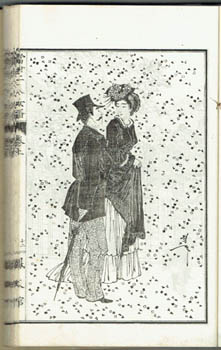
>Shakespeare. Gakkai Yoda, Shuto Osada &c. 当世二人女婿 [Tosei Ninin Muko; also transcribed as Tosei Futari Muko - this translates as something like Two Son-in-Laws of Today]. Tokyo, Hobunkan 1887 [Meiji 20]. Two volumes, 23x15cm, publisher's illustrated wrappers with title labels; one full page and six double page woodcut illustrations by Yoshitoshi. A bit of worming to five leaves, not serious; a nice copy. Au$800

Being illiterate has never been an impediment for a bookseller but sometimes it does make it hard to explain clearly what you are selling. I have read everything I can find in English on Shakespeare in Meiji Japan. There's quite a bit of it and it all pretty much repeats the same story established nearly a century ago. Three translators are fleshed out to degrees that depend on which is the focus of the historian and the rest brushed past. Gakkai Yoda was something of a leviathan in Japanese letters, theatre and culture but no-one writing in English has yet tackled his Shakespeare connection. His diaries were published in twelve volumes not so long ago so there must be plenty of material there.
Shakespeare began appearing in Japanese in newspapers in the 1870s, as fragments and retelling from Lamb's Tales. The first complete translation proper was of Julius Caesar in 1883, published in instalments in a newspaper and as a book in 1886; the first performance of a play was an adaptation of The Merchant of Venice in 1885. Hamlet, The Merchant of Venice and Julius Caesar were the favourites for the first few years and the plays were remodelled as Japanese dramas.
This is translated from a French version - this is where Shuto Osada played his part, he was the translator from French - not directly from Shakespeare; it is set in modern Tokyo - had anyone anywhere in the world consciously done this? - and there must be a good reason why.
OCLC has seven entries for this book so it must be common, you'd think. The seven entries together locate three copies, one outside Japan.
You can email an inquiry or order securely through antiqbook

Sugar & alcohol. Report From the Committee on the Distillation of Sugar and Molasses. [Second ... Third ... Fourth Report ... ]. [London], Ordered to be Printed 1808. Foolscap folio, very good in later cloth (marked and a bit stained); [4],420,[2]pp. With printed title and leaves at the front and end stating this to be the Home Office copy. Titles for each report but continuously paginated. Au$450
Is there any part of the world that in modern times has not been steered by drugs? Here we have two of the biggies - sugar and alcohol - and the dire effect a dramatic drop in the price of sugar had on Britain's wealthiest - the billionaire class - the owners of West Indian sugar plantations. Add to that the possibly rational fear of a grain shortage due to the situation in Europe and you have the makings of a governnment sponsored monopoly on alchohol production for the sugar industry. I say possibly rational fear of a grain shortage; that was the approach taken by the majority of this Committee but it was fiercely disputed by the corn and barley growers of Britain and their representatives who claimed that the Committee had been rigged and MPs from the barley counties purposely excluded.
Maybe the two most powerful influences on government are at work here: very rich men and tax. I've read that nearly 40% of Britain's taxation then came from alcohol and its ingredients and there are some fearsomely abstruse pages here calculating the adjustments needed to maintain revenue without forcing up the price of drink enough to affect consumption. Until the end of the 18th century sugar and alcohol ran a global perpetual motion machine. Ships carried slaves to America and the West Indies and returned with rum and sugar, then shipped on to Britain's other colonies and markets. Alcohol distilled in India could be shipped further east - even to Sydney by the end of the 18th century. And where ready-made drink couldn't be had, sugar was even more essential. So, to many, the sugar crisis and the newly enacted abolition of the slave trade (the trade, not slavery itself) was a threat greater than any invasion by Napoleon.
Most of this weighty report is evidence; from lofty experts like Arthur Young and from barley farmers who almost always flatly contradict the experts; from highland distillers and the Irish equivalent of The Untouchables - Major Bellingham Swan tells us that in one night he seized 101 illicit distilleries and barely scratched the surface in that area. Merchants explain how the import of French brandy continues, the war is no impediment; West Indian merchants and planters explain why trade with the United States should cease and why it should be expanded; all planters are positive that their sugar and rum are superior and still unprofitable while a London merchant tells us that falling prices and the glut are due to a drop in quality; a Jamaican planter explains that you need to run in your new negroes carefully, don't push them hard until they are "seasoned". The best run estates have the highest number of "negroes and stock" - ie cattle.
You can email an inquiry or order securely through antiqbook
Sugar - the next tobacco
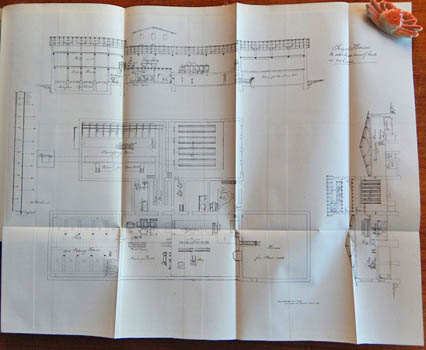
Sugar. Manufacture of Beet Root Sugar. Copy of two despatches from the Agent-General ... with estimates of sugar-houses, plans, drawings of machinery, etc. Melbourne, Govt Printer 1871. Foolscap, disbound in a modern plain wrapper; 15pp and eight litho plates (three folding). Au$200
The foundation of a sugar industry in Victoria, an attempt to match the rapidly burgeoning cane sugar industry of NSW and Queensland, was no great success. The Victorian Beetroot Sugar Company was registered in November, crops were planted near Geelong, a mill built nearby and plants built in Melbourne. By 1874 the mill was closed. The fault lay with the quantity and quality of crop not the technology and seems to have remained so in later attempts to create a southern sugar industry.
This report contains information gathered for the Warnambool Beet-root Sugar Manufactory giving plans and estimates of plants for works of two capacities. Pretty appealing and useful for the student of industrial architecture, manufactures and machinery. And sugar.
Sugar is the coming tobacco so the prescient should be carving out their positions
now for the boom to come: analysis, publicity, argument, crusades ...
You can email an inquiry or order securely through antiqbook

Homoeopathy. The Medical Telephone: containing hints on the preservation of health. Notes on nursing ... Plain directions for treating diseases. Ambulance lectures ... Hobart, The Homoeopathic Pharmacy 1883. Small octavo publisher's flushcut printed limp cloth (a hint of flecking); 116pp, a fair amount are advertisements. An excellent copy. Au$250
A neat little book with a neat title. When I first came across a copy of this, many years ago, I wondered whether there were any telephones in Hobart in 1883 but now, with online research, I find that Tasmania embraced the telephone early and 1883 saw telephone exchanges opened in Hobart and Launceston. In fact, according to Tourism Tasmania Australia's first phone call was a long distance call made in Tasmania two years before Bell got his telephone working.
This was a rare book for a long time; Ferguson missed it though it fitted his specifications for inclusion and Ford cited three copies, all in Tasmania. Then it became temporarily unscarce when a small cache of copies was discovered some years ago but now it's back to being a scarce book.
You can email an inquiry or order securely through antiqbook
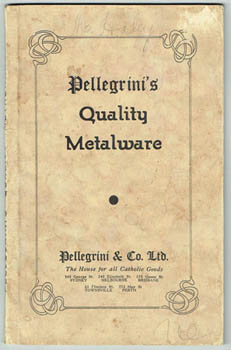
>Catalogue - church furnishings. Pellegrini & Co. Ltd. Sydney etc. Pellegrini's Quality Metalware. The company [193-?]. Octavo publisher's printed wrapper; 64pp, illustrated throughout. Mild signs of use. Au$125
Pellegrini's, purveyors of all things Catholic, offer more than decorative metalware here. While there are plenty of chalices, remonstrances. communion plates, lamps and candelabra, you can have everything from vestments to an altar bread cutting machine and a vestry lavabo. I can't find this in Trove.
You can email an inquiry or order securely through antiqbook
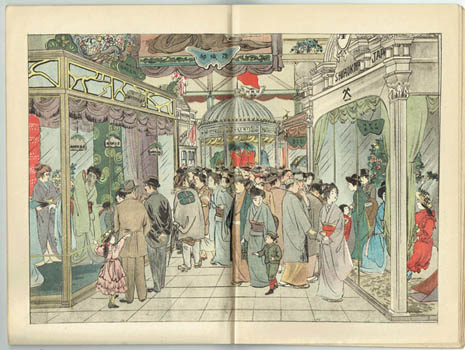
>Exhibition - Tokyo 1907. 風俗画報 . 東京勧業博覧会図会 [Special number of Fuzoku Gaho devoted to the 1907 Tokyo Industrial Exhibition]. Tokyo 1907. Small quarto publisher's illustrated wrapper (spine worn); four double page plates (two colour), one tinted full page plate, b/w photo illustrations. A bit used but a pretty good copy. English translations of the plate captions on typed slips are loosely inserted. Au$175
The Fuzoku Gaho (1889 - 1916) was Japan's first graphic magazine. I'd like to know who the artist was of some of these plates, they masterfully capture the eagerness for the new, the wonder, the distractions, the shared delights, and the weary resignation of some parents.
The 1907 exhibition was conceived as an international exhibition but this ambition fizzled due to lack of enthusiasm, if not nerve, on the part of officialdom. Nonetheless this was big stuff, expansive in its inclusion of technology, culture, the arts and popular entertainment - introducing not one but two ferris wheels to Tokyo. It did pretty good business, atttracting some six or seven million visitors.
*Click on the picture to see a couple more.
You can email an inquiry or order securely through antiqbook

Chung Teong Toy. Ah Toy v. Musgrove. A copy of the report of the arguments and judgment in the case of Ah Toy v. Musgrove - Supreme Court of Victoria. Melbourne, Government Printer 1888. Foolscap, excellent in a modern plain wrapper; 164pp. Au$750
A quick dash through Quick and Garran's Annotated Constitution reinforces the sense of the momentous that surrounds this case. Toy v. Musgrove appears again and again cited as a "great" and "celebrated" case. Chung Teong Toy, a thwarted Chinese immigrant who arrived in Melbourne on the Afghan in April 1888, brought his case - backed by the Chinese Residents Association - against Musgrove, the Collector of Customs, for refusing to accept payment of the poll-tax of ten pounds demanded from Chinese immigrants. Without getting too bogged down in details Musgrove's defence was that he had been ordered to refuse entry to all the Chinese on the Afghan. The Supreme Court found - four judgments to two - in favour of the plaintiff and ruled that the Colony did not have the right to exclude aliens. One of the Justices - Justice Williams - was reluctant to concur; it left the colony "in this most unpleasant and invidious position", unable to prevent "the scum or desperadoes of alien nations from landing ... whenever it may suit them."
This of course was unacceptable and an appeal was made to the Privy Council. In the meantime the colonies used quarantine regulations to exclude Chinese immigrants where they could and quietly let in some handfuls where they couldn't do otherwise. Amongst the outrage and furor the suggestion was made that the authorities knew they were acting illegally; a sardonic Melbourne journalist wrote, "But isn't it a curious thing that our authorities should have been induced to go to illegal lengths under the spur of excitement and public clamour. I am told privately that at the time they were warned by council that they were exceeding the limits of their constitutional prerogative, but they felt so sure of having the public at their back that they took the risk. And now an opium-smoking, yellow-skinned Mongolian has given them a lesson they (or rather the country) will have to pay for to a pretty tune." (from the Traralgon Record, 14 Sept 1888).
The appeal to the Privy Council not only succeeded in 1891 but, as I understand it, fortified the bastion of government immunity by refusing to accept that an alien "can, in an action in a British court, compel the decision of such matters as these, involving delicate and difficult constitutional questions affecting the respective rights of the Crown and Parliament, and the relations of this country to her self-governing colonies." It should be noted here that I came across this quote not by reading the Privy Council decision but reading the summary of 'Fong Yue Ting v. United States' in the US Supreme Court in 1893.
Saddest from this distance is that, reading of the activities of the Chinese Residents Assocation, it appeared to many that progress was made: the short-lived victory of this case and the grudging admission of those handfuls of Chinese immigrants seemed a great step forward. Of course all colonial governments doubled their efforts and collectively triumphed with the White Australia Policy come federation. What I can't find among the thousands of words written about this case is what happened to Chung Teong Toy. Trove finds three copies of this, two dated a century wrong.
You can email an inquiry or order securely through antiqbook
Chinese in Australia - the Lambing Flat Riots. Martial Law. (Late Riots at Burrangong). [with] Mr. William Spicer. (Riots at Burrangong) ... the case of Mr. William Spicer, tried and convicted at Goulburn, of rioting at Lambing Flat. [with] George Underwood Alley. (Petition of.) [with] Chinese Immigration Act (Despatch). Sydney, Government Printer 1862. Foolscap disbound; the four papers very good, together in a modern plain wrapper; 4pp; 7pp; 1pp; 2pp. Au$350
The basest level of claptrap about Lambing Flat I've come across was on a website called ironbark where a bad drawing of a beefcake gay St Ned slaying a Chinese dragon heads a reprint of Frank Clune's - or Stephensen's - drooling account of the riots, in which Spicer is a noble and idealistic hero. My amusement turned sour as I found that this rotted swill is still being churned over on other whites only websites.
The first paper here describes the steps taken to get reinforcements in after the troops in the goldfield had retreated after the police station was attacked by miners demanding the release of Spicer, Cameron and Stewart - the three arrested ringleaders. The second paper contains two waves of petitions and memorials asking for Spicer's release; affidavits swearing that the coppers got the wrong man; a memorial from the jurors in the case stating that if they had seen these affidavits they wouldn't have found Spicer guilty; and the refusals by Elyard to reverse the decision. The last is a letter from Newcastle - Secretary of State for the Colonies - to Governor Young quelling his misgivings about the new Chinese Immigration Act. Principles must be set aside to "protect the Colony from so undeniable an evil."
You can email an inquiry or order securely through antiqbook
Chinese in America. Chinese Immigration. Mr Page from the Committee on Education and Labor, Submitted the following Report ... [with] Mr Wills ... Submitted the Following as the Views of the Minority ... [Washington, Government printer] 1882. Octavo disbound, the pair together in modern plain wrapper; 2pp & 6pp. Actually two copies of the Minority Report here - making this near a two for one deal. Au$75
You might think that the dissenting minority here object to the racist invective and punitive measures contained in the Committee report on the Chinese Immigration Bill that the Committee instructs both houses to pass without debate and of course you'd be wrong. A bill excluding the Chinese for a mere ten years will do nothing to stem the pernicious invasion and other measures in the bill weaken even further protection against the evil tide. The minority committee members will, however, overlook the dismantling or watering down of punishments if the period of exclusion is extended to at least fifteen years.
You can email an inquiry or order securely through antiqbook
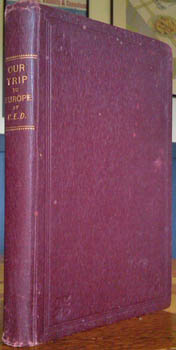
DAVIES, Hon. C.E. [Charles Ellis]. A Trip to Europe. Hobart, 'The Mercury' 1900. Octavo publisher's maroon cloth; viii,88,[2]pp; plates and photo illustrations. Some signs of use: tips rubbed, a bit loose, but a very decent copy. Au$30
Like the works of most colonial Australian travellers outside Australia, this is pretty much a private production. Some of it had appeared in the Hobart papers and Davies claims that the kind reception of those pieces led to him having this book run up. Very few of these travel accounts are less than dreadful - and this being a politician's trip scared me off. Still, it can be argued that Australian views of the greater world should not go unnoticed.
You can email an inquiry or order securely through antiqbook

Train at Night. Japanese colour woodcut of a train and signal man. n.p. n.d. Early Meiji, c1872? 160x375mm, a few small holes. Au$450
Before even the first train hit the rails every person in Japan who could hold a brush or chisel was hard at work turning out prints of trains. They range from naive scratches to elaborate pageants of life in modern Japan but I've never seen one like this. The format and the style mark it out but maybe more remarkable is that this is a train at night.
Kiyochika is credited with being the first to upend the conventions of how the machine was to be seen with his mordant and somewhat fictional print 'View of Takanawa Ushimachi Under a Shrouded Moon' of 1879 which shows how the train changed the night wherever it went - which in turn was a reversal of most prints in that series which show how night changes the world.
The anonymous print here might be loaded with symbolism but there is no play of light and shadow; there is no ambiguity, no hint of landscape to be obliterated, no way to read melancholy into it. There is nothing of traditional Japan here, only telegraph poles, train, signalman in western uniform waving the train onward, westward ho. The only hint of the past here is the heroic stance of the signal man, familiar from prints of warriors urging their troops into battle.
You can email an inquiry or order securely through antiqbook

>Sugoroku. 子乗物双六 [Ko Norimono Sugoroku]. Tokyo, Seugaku Sophomore, Ist January, 1930 (Showa 5). Colour lithograph broadside, 54x78cm; Folded, a nice copy with playing pieces intact in the left margin. Au$350
An exciting and vivid jaunt around the world and all forms of transport is the theme here. This was the New Year treat that came with the magazine Seugaku Sophomore (for the second year of primary school).
I don't know who those two kids are but they never aged and, with updates in fashion and style, seem to have been on a ceaseless whirl of travel and adventure ever after. For decades new but the same sugorokus appeared. The zeppelin vanished of course, square automobiles became sleek cars, trains went diesel and electric and aeroplanes became jets, and on those kids went. Perhaps they learnt early what many idle wealthy globe trotters know: that a diet of fine demi-sec and pure cocaine keeps you young forever.
 上り
上り
You can email an inquiry or order securely through antiqbook
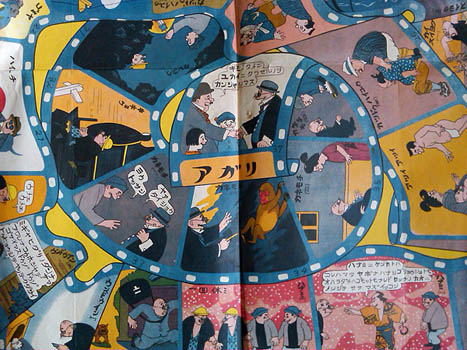
>Aso Yutaka. ノンキナトウサン出世双六 [Nonki na Tosan shusse sugoroku]. Tokyo, Hochi Shinbunsha January 2 1925 (Taisho 14). Colour illustrated broadside game (54x79cm); folded, mild signs of use. With the circular portraits of the characters down the side which could be cut out and used as game pieces. Au$650
The new year extra from the newspaper Hochi Shinbun starring Japan's first serial comic strip hero Nonki Na Tosan - usually translated as Easy-going or Lazy Daddy - who first appeared in regular comic strips in the paper the year before. He owed some debt to Jiggs of Bringing Up Father but uncle Nonto was a thoroughly Japanese scapegrace and loafer who quickly made his way into games, toys and, in 1925, a short animated film.
Now our game is presented as a film while the information I've found about the film, and all the toys, suggests that they were piracies; comic characters were not protected by copyright. Perhaps an all round notion that popular comic strips and film are natural partners explains what may or may not be a coincidence. This may be Nonto's first sugoroku but it certainly wasn't his last. Come the early thirties as the manga craze blossomed our hero was often teamed with Mickey Mouse and Betty Boop - something of a holy trinity.
As said, uncle Nonto is a loafer and this game follows him through a series of disastrous attempts at holding down a job.
You can email an inquiry or order securely through antiqbook
SEELEY, J.R. The Expansion of England. Two courses of lectures. London, Macmillan 1883. Octavo publisher's cloth; viii,308pp. A grammar school label and small stamp on the endpapers but a very good copy. Au$75
First edition. At first glance one of the less enticing of 'Printing and the Mind of Man' books but Carter and Muir do, as usual, make a cogent case for its inclusion in their list of world-changing books (see PMM 369).
You can email an inquiry or order securely through antiqbook

BEALE, Lionel S. Life Theories: their influence upon religious thought. London, Churchill 1871. Octavo publisher's brown cloth; xii,97,[2]pp and six coloured plates. Spotting of the endpapers but a nice, bright copy. Au$75
A good example of the weight of authority arrayed against wrong-headed fashion. Beale was no lightweight in the medical establishment and Churchill were authoritive publishers of medical books. Beale stood firm against the germ theory and here he stands firm against physical theories of nature. The coloured plates are from microscope studies (which Beale is possibly now best known for) - evidence that this is no mere theological argument.
You can email an inquiry or order securely through antiqbook
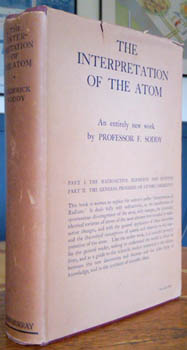
SODDY, Frederick. The Interpretation of the Atom. London, Murray 1932. Octavo publisher's cloth and dustwrapper (this a little frayed and chipped at the head of the spine); 73 illustrations and two folding tables. Spots on the fore and top edge, a few inside. Quite a good copy. Au$225
First edition of Soddy's last serious scientific work. By this time he had already, like all cranky old men, turned to solving the world's economic ills. This is a testy book; Soddy is exasperated with the current fad for ignoring "the ordinary phenomena of Nature in favour of the exceptional" and announces that he is not among "those who can bow down and worship the square-root of minus one."
You can email an inquiry or order securely through antiqbook
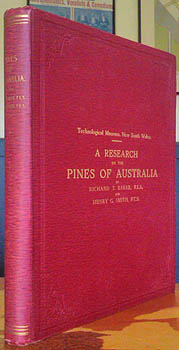
BAKER, Richard.T. & Henry G. SMITH. A Research on the Pines of Australia. Sydney, Govt Printer 1910. Largish quarto publisher's cloth; 458pp, hundreds of illustrations, several colour. Rather a good copy. Au$75
The botany, chemistry and economics studied, including such things as the tanning qualities of barks.
You can email an inquiry or order securely through antiqbook
STEAD, David G. Fishes of Australia: a popular and systematic guide .. Sydney, Brooks 1906. Octavo publisher's gilt cloth; xii,278pp, 10 plates, 88 illustrations through the text. A withdrawn Royal Society stamp on the front fly, no other markings and a rather good copy. Au$40
You can email an inquiry or order securely through antiqbook
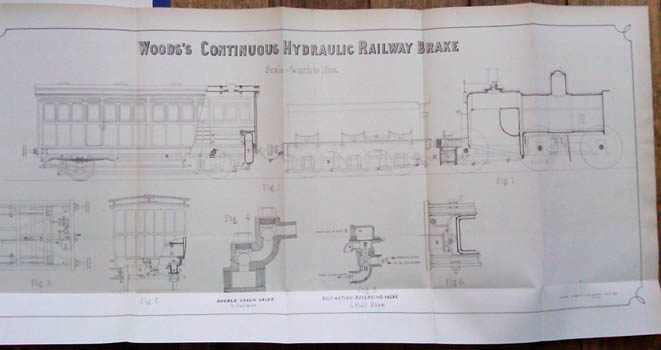
Railways. Woods' Continuous Automatic Brake. [Two reports]. Melbourne, Government printer 1880. Foolscap, the two together in plain modern wrapper; 5pp & 3pp and a long folding plate. Top inner corner torn away from the first report, still in good, fresh shape. Au$90
Continuous brakes - a brake that could be applied to all carriages at the same time by the engine driver - are at this time a new thing. The first report is the Locomotive Engineer's report on the comparative tests between the Australian invented Woods' hydraulic brake and the Westinghouse air brake already installed in some trains. He comes down firmly in both camps and recommends that one be fitted to trains on the northern line and the other to trains on the southern line until either's reliability is proved.
Disputes over the two systems surface in the newspapers for the next five years years then seem to evaporate. Westinghouse air brakes are pretty standard everywhere now and I'd say the wikipedia entry on railway brakes was written by Westinghouse.
You can email an inquiry or order securely through antiqbook
>Costume. Ladies' Garments and How to Make Them. A practical treatise on the art of sewing, pressing & other details ... as employed by tailors ... by "Several Experts" ... London, John Williamson [c1894]. Octavo publisher's gilt decorated red cloth; [8],80pp, several illustrations and diagrams. Minor signs of use, a rather good copy. Au$150
A slender book maybe, but so packed with information that I wonder how Williamson thought they could justify all the other tailoring books and magazines they published. I can only find much later versions of this - and not many of those - in OCLC and Copac.
You can email an inquiry or order securely through antiqbook

>Ikeda Eisen [aka Keisei Eisen]. 新版江戶花呉服屋大雙六 [Shinpan Edo no Hana Gofukuya Sugoroku]. [Tokyo], Yamashiroya Matabe [1820 - 1850?]. Woodblock print 67x46cm, printed in black, blue and pink; folded. Smudges and soiling, a couple of small chips from the top edge. A pretty decent copy, certainly better than the only other copy I've located. Au$1,250
Another lesson, if we need it, that the Japanese had connected and mastered the important stuff of life long before the rest of us: advertising, fun and shopping. In this sugoroku - a racing game - Eisen takes us through the most prestigious dry goods stores and drapers - ie high fashion - of Edo (Tokyo) until we reach Ebisu and Daikokuten - gods, respectively, of merchants and wealth. In other words, who isn't this game for? Every working Edo inhabitant with a speck of ambition will want a place among the great merchants, rubbing shoulders with such gods while their wealthy patrons have confirmed that their shopping habits are blessed by the gods. The titans of fashionable commerce here include Echigoya (now Mitsukoshi), Shirokiya (which lasted some three hundred years, its ghost is a department store in Honolulu), Iwaki Sotoya, Matsuzakaya (still going), Ebisuya, Daimaru (still going), Shimaya, Sawanoi and Izukura.
Eisen did more than one sugoroku: this, one of more prosaic sights of Edo, one of the Tokaido road, and an elaborate sort of fourth one - the set of courtesan prints which together form a game - are the ones I've traced. I can only find one other copy of this shopping adventure, printed in yellow rather than blue, in the UC Berkeley library.
*Click on the picture to a couple more.
You can email an inquiry or order securely through antiqbook
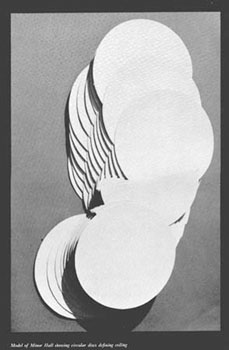
Jorn Utzon. Zodiac 14. Milan 1965. Quarto publisher's illustrated wrapper; 216pp and illustrated adverts; numerous photo illustrations, plans &c. Au$150
Zodiac 14 can be called the Utzon Number. Though he doesn't fill the issue he does dominate it with Giedion's 'Jorn Utzon and the Third Generation' and his own descriptions of the Sydney Opera House, the Silkeborg Museum and the Zurich Theatre. Elements of the Opera House, like the plywood interior of the auditorium, the corridors and the glass walls, which were tentative or unresolved in the 'Yellow Book' are explained in detail here, Utzon's last publication while still architect for the Opera House.
You can email an inquiry or order securely through antiqbook
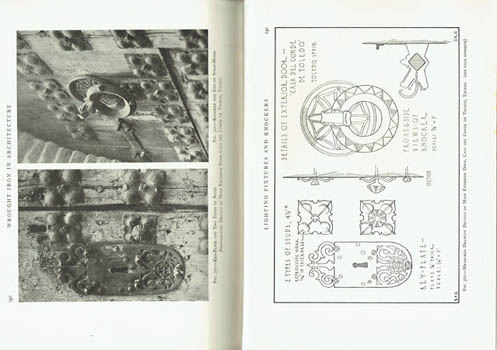
GEERLINGS, Gerald K. Wrought Iron in Architecture ... craftsmanship, historical notes and illustrations .. modern wrought iron, lighting fixtures ... specifications. NY, Scribners 1927. Quarto publisher's cloth, very good in insect chewed dustwrapper; 202pp, numerous photo illustrations, measured drawings &c. Au$75
You can email an inquiry or order securely through antiqbook
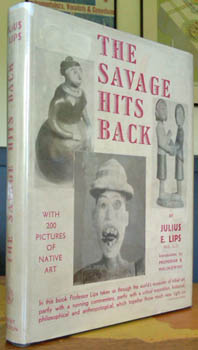
>LIPS, Julius E. The Savage Hits Back or the White Man Through Native Eyes. London, Lovat Dickson 1937. Small quarto publisher's cloth and dustwrapper (small piece from the top of the back panel); xxxi,254pp, 213 photo illustrations and line drawings. A nice copy. Au$350
First edition - and hard to find in such good shape - of this remarkable book with a history that, if half of what Lips tells us is true, makes it even more remarkable. In March 1933 Lips resigned his directorship of the Rautenstrauch-Joest Museum in protest against the edicts of the new Nazi regime and found he "was the only 'Aryan' ethnologist to do so." What followed over the next year is the stuff of every nightmarish thriller about that period; threat, persecution and false accusation by a former student and a former assistant - now in control of the museum - the mayor of Cologne and the secret police in pursuit of his manuscript and photographs. "An uproar was produced by the simple fact that a Cologne professor had lying in his house a manuscript the theme of which was the criticism of the white race by their coloured brethren. In addition there were among the illustrations portraits of high German military and Government officials which were the work of blacks, one of the 'lower races'. The mere possession of the pictures was a crime against the State, how much more criminal the attempt to publish them!" The "idea of the illustrations had become a semi‑official mania; although only the students had seen them, it was now the State, i.e. the Nazi party, that wanted them." The mayor "had cultivated a feverish curiosity about the vanished pictures, which were supposed to be lurid with "nigger atrocities" and "insults to Hitler"."
Finally a moonlight flit with his pictures and manuscript on the eve of his arrest was his only option. This left his wife as "a hostage for the production of the manuscript" - which is where I hope Lips is being overly dramatic about the whole affair - while Lips made his way to London and found Lovat Dickson who agreed to publish before he had read a line of the book.
The book is revolutionary. It was the first time a mirror was held up in such a simple graphic way to the west who were shown how most of the world - the supposed savage world - saw them. And how keenly it saw them.
You can email an inquiry or order securely through antiqbook
WITTKOWER, Rudolf. Allegory and the Migration of Symbols. Thames & Hudson 1977. Small quarto, excellent in publisher's cloth and dustwrapper; 223pp, 251 illustrations. Au$75
You can email an inquiry or order securely through antiqbook
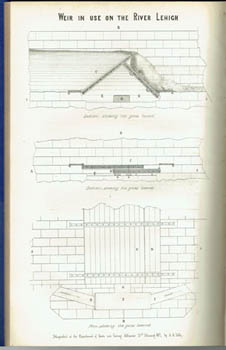
Murray River. Report of the Royal Commission ... to examine into and report upon the best means of Clearing the River Murray, etc. Melbourne, Government printer 1867. Foolscap, plain modern wrapper; 100pp, five full page or folding diagrams. Title a touch dusty, still and excellent copy. Au$120
The first of umpteen commissions and inquiries into the river. There must be more poorly timed Royal Commissions than this but I can't think of any. The Commission was instituted in 1866 and reported in February 1867. Three of the four commissioners unhesitatingly endorsed the Victorian government's current practice but one, John Orr, wrote a stern protest, more or less saying the others didn't know what they were talking about. The flood season a few months later brought the flood that still has a high standing in the record books. The one inarguable benefit from this commission was the first thorough survey of the river, from Albury to Wentworth.
Orr makes the point that a good starting point in the general desire for federation of the colonies would be N.S.W. and Victoria agreeing to set up a trust to manage the river. Such an agreement was made in 1960.
You can email an inquiry or order securely through antiqbook
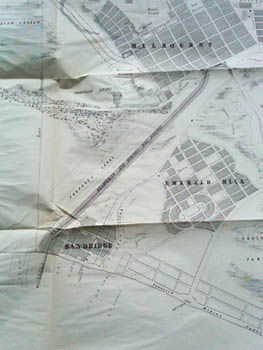
>Melbourne. Report Upon the Various Plans for the Improvement of the Port of Melbourne. Melbourne, Govt Printer 1855. Foolscap folio, stitched as issued; 10pp, large folding plan inserted loose. Au$175
Pasley and Amsinck, the Colonial Engineer, report on four schemes to improve the undeveloped port now swarming with ships drawn by the goldrush. The most ambitious is F.C. Christy's canal and dockyards but more favourably treated (though Pasley regarded it, like the others, as too ambitious) is Amsinck's own scheme with incorporated defences.
You can email an inquiry or order securely through antiqbook
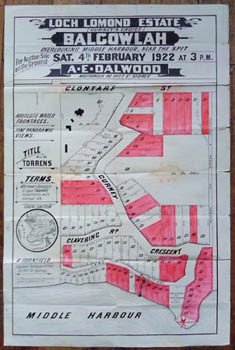
Real Estate - Sydney. Loch Lomond Estate ... Balgowlah - overlooking Middle Harbour, near The Spit Sat 4th February 1922 ... A.E. Dalwood ... Sydney, printed by Enemark & Burton 1922 Broadside 76x51cm, lithograph with some handcolouring. Folded with several tears along fold. A somewhat ratty copy. Au$25
You can email an inquiry or order securely through antiqbook

Queensland. Socialism at Work. How the Queensland Government succeeded in profitably establishing state ventures where the needs of the people ... Brisbane, Govt Printer 1918. Octavo publisher's printed wrapper (chipped and detached); 136pp, photo illustrations. An ok copy. Au$30
The triumphs of the Ryan government, the start of a long run of Labor in power. Surely no government these days could so flagrantly use public resources to advertise their successes in an election year.
You can email an inquiry or order securely through antiqbook

Socialism. Socialist Theory Series No.1. Political Economy. Beginner's Course. Sydney, Modern Publishers [193-?]. Octavo publisher's printed wrapper; 48pp including five blank pages for notes. Au$25
Looking curiously like a confectionary box this a catechism in 56 questions and answers. There is a smaller edition of this which I presume is later.
You can email an inquiry or order securely through antiqbook

>観察絵本 - キンダーブック [卜ケイ] [Kansatsu ehon - Kinda bukku - boku kei]. Tokyo, Fureberukan 1932 (Showa 7). Oblong folio, 26x38cm; 16pp including covers, all colour lithographs on light card. Covers dusty with some smallish flaws to the back cover; used but a very acceptable copy. The publisher's colophon, in a corner of the back cover, is framed in a small clock face and an owner has neatly numbered the clock and put hands in at 3 o'clock. Au$350
Telling the time for kids, one in a series of "observation" books begun in 1927 by the now named Froebel-kan - based on the principles of educator Friedrich Froebel. I've found images of a few of these early books and this is the most stylish by miles. The Fureberukan has published magazines and squillions of worthy books since then, still does, and they look pretty revolting. This one steps into nauseating cuteness here and there but the good plates more than make up for it. I can't find a record of this anywhere.
*Click on the picture to see more in the gallery.
You can email an inquiry or order securely through antiqbook

>Children's ABC. All Aboard ABC. London, Dean & Son [c1905]. Folio (37x26cm), covers and ten colour pages by Frank M. Barton mounted on card and bound as a concertina. Someone has taken Dean's declaration "untearable" as a challenge and managed to put a two inch tear into the top of one card, without loss; in all rather good. Au$300
A delightfully large celebration of transport and movement with a bas relief front cover. Only a couple of letters display some clutching at straws - Q is for quickness and Z is for zebra cart, and no book is ever debased by the presence of zebras.
You can email an inquiry or order securely through antiqbook
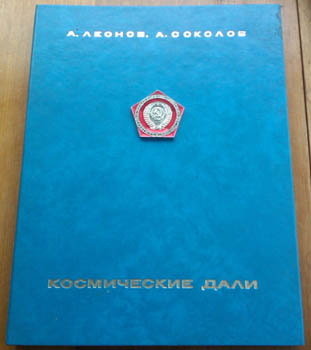
>LEONOV, AA. & A. SOKOLOV. Космические Дали [Kosmicheskie Dali -Space in the Future]. Moscow 1972. Folio (380x285mm) publisher's blue vinyl portfolio with a mounted enamelled metal medallion on the front; 36 pages of text and 34 plates (16 double page). Au$250
A masterpiece of Soviet ambition and optimism about space at its height. They may have been pipped getting a man on the moon but nothing was going to stop them leading humanity out into the galaxy.
Leonov is, of course, the pioneering cosmonaut who was to have been the first man on the moon. He collaborated with Sokolov on a couple of other similar galleries of the future and this, from the outside, is probably the ugliest and most appealing. A feature of the double page plates is their division, presumably, into day and night: the left side is colour and the right silver and black.
You can email an inquiry or order securely through antiqbook
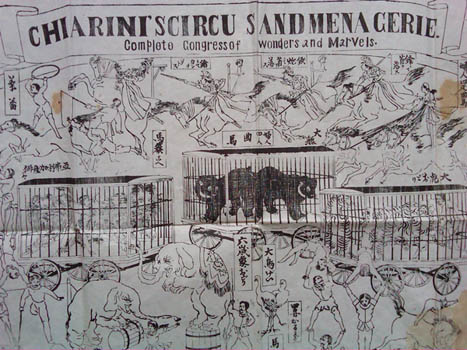
>Chiarini's Circus and Menagerie. Complete Congress of Wonders and Marvels. n.p. 1887 (Meiji 20). Woodcut poster 380x505mm, folded. Stained on the right side and a couple of blotches elsewhere, still a rather good copy for such a vulnerable thing. Au$750
Chiarini's circus spent months in Japan in 1886 and 1887 and the Emperor saw his first circus. And being true royalty he was generous in his appreciation, not like a certain modern bunch who will reward with a handshake and have their accountant bill the nation for new gloves. Chiarini's was the circus for much of India, south east and east Asia, Australia, New Zealand, Latin and South America. They were indefatigable travellers.
I gather it was the scale of the spectacle, the horse riders and the animals that enraptured the Japanese. They already had plenty of great acrobats. I read somewhere that the first Japanese given official permission to leave the country were acrobats snapped up by the canny Richard Risley whose circus had been allowed into Japan in 1864 but no further than Yokohama.
In this poster the stars are hard at work and are identified.
* Click on the picture to see a couple more.
You can email an inquiry or order securely through antiqbook
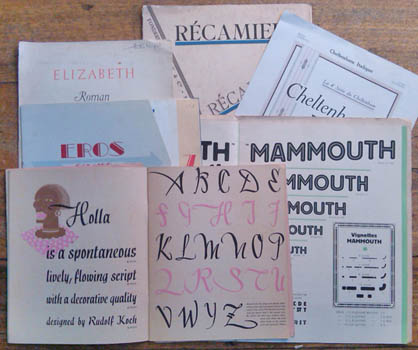
Typography. A gathering of six sample brochures and booklets from various typefounders and agents in the twenties and thirties. v.p. v.d. 1920s - 30s. Quarto and octavo wrappers (a couple with wrappers detached). Printed in various colours. Au$75
Four are French - Fonderie Warnery and Fonderie Typographique, one is from Huxley in New York and one is from Seligson & Clare in Australia. A pretty enough little bundle.
You can email an inquiry or order securely through antiqbook

>Catalogue - clothing. E. Rosenburger, New York City. A Dark Secret is Let Out By [cover title; inside:] The Clothing Specialists of America. E. Rosenburger & Co. NY, the company [c1890]. Large octavo (26x18cm) publisher's illustrated wrapper; [16]pp, illustrated by wood engravings throughout. A vertical fold, a rumpled but very decent copy. Au$350
A splendid example of the value that even the most casual racism adds to any advertising. Who could resist opening this to find out what could so shock this mammy? What is it about images like this that made them so successful? It can't just be that they were funny, nor that they comforted one race nursing a fear of another. And what makes them so magnetic now. It can't just be that they shock us?
And what is the dark secret? I've been right through this and I'm still not convinced there isn't some secret beyond Rosenburger and their cheap suits for men and boys. I can't find this or any Rosenburger catalogue in Romaine, McKinstry or anywhere else I can think of looking.
You can email an inquiry or order securely through antiqbook

Catalogue - perambulators and carriages. Halesowen, Brirmingham. Halesown Perambulator & Carriage Co, Ltd. Illustrated Catalogue. Season 1895. The company 1895. Quarto publisher's illustrated wrapper (a bit frayed, with some discreet old repairs); 40pp, illustrated throughout with wood engravings. Au$300
Some pretty desirable stuff, a child's hansom cab for instance; inexplicably elaborate mail carts, kids rocking horses and tricycles and more.
You can email an inquiry or order securely through antiqbook

>Catalogue - Scientific Apparatus. Townson & Mercer, London. Catalogue of Chemical & Scientific Apparatus, Balances, Graduated Instruments, Pure Chemicals, &c. The company, March 1901. Octavo publisher's cloth (neatly rebacked with the slightly chomped but essentially complete original spine retained); xxxii,720,xliipp, hundreds of wood engraved illustrations. A bit spotted but very decent. Au$175
Eighth edition, with every necessity for every kind of laboratory (not to mention some rather good models in the mechanics section). The last section is Towson & Mercer's stock of laboratory equipment made by Fletcher, Russell & Co.
You can email an inquiry or order securely through antiqbook

>Catalogue - fashion. Cleghorn & Harris, Cape Town. A Journal of Fashions for the Summer Season 1902-3. The company 1902. Folio (375x250mm) publisher's printed wrapper with onlaid colour illustrations (a colour view of their building on the back); [2],142pp illustrated throughout in line and half-tone. Used with some minor flaws, a more than decent copy. Order form detached at the end but the gent's half still present. Au$350
An expansive and handsome catalogue of dress of all layers for all occasions for women, men, children and infants. As well: fancy work, drapery and haberdashery, household goods, stationery, clocks and watches, and a couple of pages of cricket equipment. How many catalogues like this Cleghorn and Harris issued remains a mystery to me; I can't find a record of any catalogue anywhere, including South Africa.
You can email an inquiry or order securely through antiqbook
Vanishing architecture?
SNELL, John F.C. Power House Design. London, Longmans 1911. Octavo publisher's cloth; 448pp, 186 illustrations, 17 folding plates. Au$75
First edition. A solid practical text with descriptions and illustrations of various types of powerhouses throughout Europe, North and South America.
You can email an inquiry or order securely through antiqbook

>Garnham Blaxcell. Indenture made on 20th April 1815 between Garnham Blaxcell and Sir John Jamison leasing large parcels of Sydney to Jamison in receipt of payment of five shillings. n.p. 1815 Folio, three pages on two conjugate leaves, folded with docket title on the last page. Paper quite discoloured but sound, ink faded but legible.
Signed and sealed by Blaxcell. A Lands Titles Office stamp of 1868 on the docket doubtless relates to an application under the Real Property Act for some land originally part of Blaxcell's grant. Au$1,350
A splendid and telling foundation document for the history of that most Australian heroic icon - continued in an unbroken line from Blaxcell to now - the unscrupulous and overreaching entrepeneur who ducks the consequences. Blaxcell was only one of the network of grasping shonks that constitute the noble pioneers of this new nation - most of them are familiar place names now - but I gather he was the first to go from titan to vanishing fugitive pretty much overnight. His empire had been precarious if not illusory since at least 1809 when he began mortgaging his property to business partner Thomas Jamison but still he was part of the consortium that made the Sydney hospital for rum deal with Macquarie and was issuing currency notes* as late as 1814 while his promissory notes continued to be dishonoured.
Thomas Jamison's son, Sir John, arrived in the colony in 1814 and obviously set about collecting on Blaxcell's debts to his late father. The first and largest plot is the 1125 acre grant now known as the suburb Granville and I lost count of the smaller plots - each between 25 and 60 acres - in Petersham. I'm puzzled by what exactly this document is. There is mention in this agreement of rent of one peppercorn that I don't understand. Was this some scheme to hide rather than lose his assets or, more likely, a way for Jamison to collect his debt without joining the queue? Certainly this agreement pops up again in 1820 in the case of Campbell v. MacArthur and Oxley - crony and estate administrator of Blaxcell respectively - when the double dealing solicitor William Henry Moore boasted that he could "overturn the settlement made between Sir J. Jamison and Mr Blaxcell" (Sydney Gazette 1820). In any case, Blaxcell, aware that the authorities were closing in, snuck out of the colony in April 1817 and quickly drank himself to death in Batavia.
*One of these worthless currency notes sold a couple of years ago for $6700, apparently a decent return for a 200 year wait for payment of ten shillings. Doesn't seem enough to me.
You can email an inquiry or order securely through antiqbook

See what I mean?
John Edye Manning. Copies or Extracts of Correspondence relative to the Default of Mr. Manning, late Registrar of the Supreme Court of New South Wales; .. Ordered by the House of Commons to be Printed, 9 August 1845. Foolscap, sewn as issued; 52pp (last page the docket title). Title quite dusty, a bit of browning and a few spots. Au$150
An archetypal story of Australian business and government. Manning was appointed Registrar of the Supreme Court in 1828 after having spent some nine years on the continent avoiding his creditors. On arrival in Sydney in 1829 he immediately complained about the lack of land grants, decent renumeration and the onerous demand of providing security against his administration of intestate estates. Over the next dozen years he built an empire in shipping and land interests but on going under, to the tune of some £30,000, in the depression of 1841 it was discovered that he taken some £10,000 (at least) in trust money with him. The British government refused to relieve creditors and it was some years before the Legislative Assembly took steps to provide payment. In the meantime Manning retired again to the continent.
You can email an inquiry or order securely through antiqbook

The boss's copy
>Prison Administration in South Africa. Department of Foreign Affairs [1969]. Quarto, excellent in publisher's gilt stamped limp leatherette; [6],46pp and numerous photo illustrations (some colour). Au$150
The Prime Minister's copy, stamped "B.J. Vorster" on the front cover, of this model for beleaguered governments. Change a few names, photoshop in some Melanesian flora and local critics will be silenced along with the rest of the meddlers and conspirators plotting the demise of national autonomy round the world. Significant here is that it was only the South African Foreign Department, not those directly responsible, that felt the need to respond to growing international condemnation and the United Nations resolution of 1968. Still, this report was delivered to the United Nations with a defiant letter stating that the UN had no competence to criticise prison management (cf Horrell; Survey of Race Relations in South Africa 1969).
One section addresses the "attempts to discredit the South African prison system" and implicit in the photographs of healthy young black African men being taught trades and cared for by older and wiser white men in clean modern facilities is that any complaint by them would be unforgivable ingratitude given that they must be better off since leaving their slums and shanties.
Vorster had been the Minister for Justice and for Police and Prisons until his elevation to Prime Minister in 1966 so it must have been doubly satisfying to see his legacy blossoming under the care of his successor, Pelser.
You can email an inquiry or order securely through antiqbook
JONES, Ernest. Treatment of the Neuroses. London, Bailliere, Tindall & Cox 1920. Octavo publisher's cloth; 232pp. Quite a good copy. Au$50
First edition. Freud may have invented neurosis but Jones played no small part in making it popular throughout the English speaking world.
You can email an inquiry or order securely through antiqbook
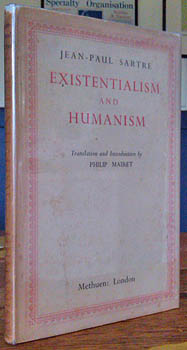
SARTRE, Jean-Paul. Existentialism and Humanism. Translation ... by Philip Mairet. London, Methuen 1948. Slender octavo, very good in publisher's cloth and slightly frayed dustwrapper. Au$50
First English edition.
You can email an inquiry or order securely through antiqbook

Zanzibar. Universities Mission to Central Africa. Mambo Ya Chuoni na Kawaida za Mafundisho. Zanzibar, printed at the Universities' Mission Press 1890. Slender octavo publisher's cloth with printed title label on the front; [8],56pp. Some words translated into English in pencil in the margins. Au$425
A rare little book; the manual of school method and management for the use of native school masters and pupil teachers of the Universities' Mission. The Universities' Mission to Central Africa was a high church Anglican organisation established in 1857 within the universities and ran for over a century. The first mission, to Malawi, was a disaster and the move of headquarters to Zanzibar came in 1863. Early accounts of the mission speak often of the bustle of the printing room, it seemed the centre of mission activity, describing the Bishop when not at work in the printing room being followed about the mission by boys waving proof sheets. Many boasts are made about "mission boys" now working in government printing offices throughout central Africa.
There seems to have been a level of industry way beyond what survives in libraries. The earliest publication from the press there I've traced is 1872 and titles are sparse until the late 1880s when production stepped up. None are common and no library, including the universities, seem to have a comprehensive collection. Of the four universities involved I can find a copy of this in one of their catalogues - Oxford. Further search finds one more copy, in Berlin.
You can email an inquiry or order securely through antiqbook
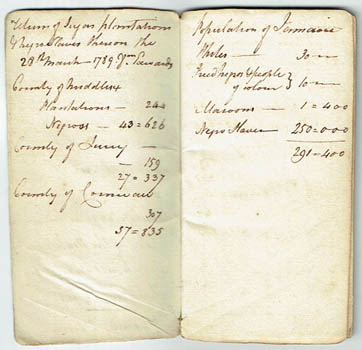
GOLDSMITH, John. An Almanack for the Year of our Lord God, MDCC.XCVIII. Being the Second After Bissextile or Leap-Year. Wherein are Contained Necessary Rules and Useful Tables. London, Printed for the Company of Stationers, 1798. 110x57mm publisher's glazed wrapper (rubbed); 48 and four blank leaves at each end (one removed). Printed in red and black. Au$75
A properly used copy with several lists and notes on the blank pages including some suggesting that an interest in Jamaica may be a prelude to a trip there: a recipe for "prevention of putrid contagion" is followed by some facts and figures from Edward's 1789 history of the West Indies.
You can email an inquiry or order securely through antiqbook

Middlebrow aeronautic literature
DUCHENE, [Emile Auguste]. The Mechanics of the Aeroplane. A study of the principles of flight. Translated from the French ... London, Longmans &c 1912. Octavo publisher's cloth; x,231pp, figures through the text. A few spots but quite a good copy. Au$125
First edition in English, from the French of the previous year. Claimed as the first attempt to bridge the gap in aeronautical literature between the exclusively mathematical and the elementary, popular works. So was Duchene aiming to be the Anatole France of aeronautical literature?
You can email an inquiry or order securely through antiqbook
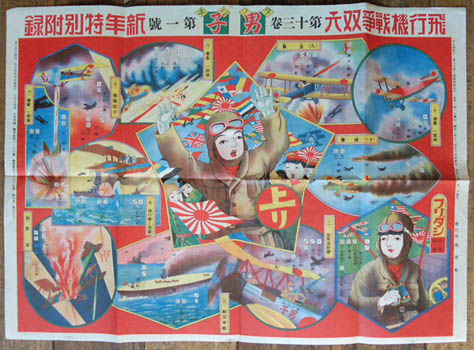
>Suguroku. 飛行機戦争双六 [Hikoki Senso Sugoroku]. Tokyo, 1928 (Showa 3) Colour illustrated broadside game, 40x55cm. Folded, a nice copy. Au$650
A near breath-taking tour de force display of the Japanese talent for blending infantile cuteness, mayhem and sinister threat. Most bellicose nations produced books, pictures and games of and for toddler soldiers but they were usually dressed up kids playing at soldiers. Here we race, using dice, with our child pilot from his farewell ceremony to his triumphant return, destroying any number of enemy ships and planes along the way.
Telling is the implication in the last triumphant scene that most important nations of the world supported Japan's war aims; not the US perhaps but Texas was in their corner.
Miyazaki is too
young to have owned this when new but I can't help believing that images just like this lodged in the child and captivate the adult.
You can email an inquiry or order securely through antiqbook

EVANS, Bob [ed]. Surfing World Vol 1 No 1 ... Vol 2 No 6. Sydney, September 1962 to August 1963. 12 issues quarto together in contemporary cloth titled in gilt, all covers preserved; thoroughly illustrated. A couple of old minor tape repairs. Au$625
The first year of the pioneering surf journal, begun as a sport went viral and became life but still more wholesome than not - a subculture rather than the drug raddled counterculture it would soon be. Trove finds no complete run, only two libraries hold issues from the earliest years.
You can email an inquiry or order securely through antiqbook

>Kurofune Kawaraban. Perry and the Black Ships in Japan. Kawaraban or illustrated news sheet titled 亜墨利加舩号人物姓名録 [Amerika sengo jinbutsu seimei-roku - Details of the people from the American ships]. n.p. n.d. [1854] Woodblock printed broadside 17x24cm. Some insect holes in the margins repaired. Au$1,050
These illicit illustrated news sheets for the streets were produced by the million for a couple of hundred years so of course few survive. They were produced for anything more interesting than the drop of a hat and the arrival of the Black Ships, the American squadron commanded by Perry, in 1854 eclipsed any and all tiresome earthquakes, fires, plagues, famines, murders and scandals. For most Japanese this was the same as a squadron of alien space ships arriving on earth now. These prints are the kurofune kawaraban.
The columns of detail about the members of the ships - and it may well be fact - give this the authority of documentary evidence but what is immediately clear is that the artist drew this view of the procession carrying gifts for the emperor from description. He certainly had never seen an American and had no authentic picture to copy from, so things unfamiliar have become things somewhat familiar: the Americans' odd hats are like those of the mongol Chinese, Americans carry swords so naturally they would be carried on their back. What must also have been described and is beautifully caught is that Americans are a shambling, undisciplined bunch but they seem cheery enough.
So, why not use pictures of the Dutch as models? Was this issued in some provincial city where even images of the Dutch were unfamiliar? Did the differences as described overwhelm the similarities? Or, as I suspect, was it a canny commercial decision that a new alien race that looked much like the Dutch would sell no papers?
The Ryosenji - the Black Ship Museum in Japan, which boasts the largest collection of Black Ship material - does have a copy of this among the fewer than twenty kawaraban they hold. I can't find one anywhere else.
You can email an inquiry or order securely through antiqbook

>Kurofune Kawaraban. Perry and the Black Ships in Japan. Kawaraban or illustrated news sheet of a sumo wrestler defeating three American sailors while American and Japanese onlookers laugh and clap. n.p. n.d. [1854]. Woodblock printed broadside 17x24cm. Some insect holes in the margins repaired. Au$1,150
A joyous depiction of perhaps the first international wrestling match in Japan? The text explains that first one, then two, then three foreigners took on the Sumo wrestler. Our artist captures the moment one hits the ground and the other two are about to follow him. The Americans are laughing hard enough to cry while two of the Japanese spectators take their role as critics or judges seriously. Are they a summation of Japanese reactions to the westerners: disapproval, delight and a clinical determination to do the job right? There exists a kawaraban perhaps by the same artist showing Sumo wrestlers delivering a gift of rice for the Americans to the beach close to their ships. Three wrestlers pirouhette and juggle hefty bales of rice like toys. There was quite a bit of fun in these meetings despite the arrogant aggression of Perry himself.
The Ryosenji - the Black Ship Museum in Japan, which boasts the largest collection of Black Ship material - doesn't have a copy of this in their catalogue and I can't find one anywhere else.
You can email an inquiry or order securely through antiqbook

Edward Stanford. A Map of the Nile, from the equatorial lakes to the Mediterranean ... with the surveys and explorations of Emin, Junker, Stanley, &c. ... 1896. London, Stanford 1896. 68x56cm colour map, dissected and mounted on linen folding into publisher's case with printed label (outer front hinge split but perfectly firm, two owners' inscriptions on the label). Au$75
You can email an inquiry or order securely through antiqbook

>MURPHY, G. [George] Read. Beyond the Ice. Being a story of the newly discovered region round the north pole. Edited from Dr. Frank Farleigh's diary. London, Sampson Low & Melbourne, Hutchinson [1894]. Octavo publisher's illustrated blue cloth (two small blobs of wax on the front cover, marks on the back). Somewhat canted, not a bad copy of a book guaranteed to respond badly to handling.
A signed presentation, dated March 1894, from Murphy, then Clerk of the Court at Geelong, later Police Magistrate, to Geelong lawyer Aurel Just, "gentleman, Dremanist and possessor of other titles," with a quote from his character Vernon Dreman. Au$950
Only edition of this polar utopia and distopian lesson which Murphy - I suspect simple perversity - took to the opposite end of the world in defiance of the usual Australian practice of heading south. Heaps of scientific advances and flying machines as expected but reform and enlightened progress can only go so far: adult women are enfranchised until they marry, then the possible conflict between husband and wife is not worth the candle.
"The chief characters seem to spend a deal of unnecessary time in consuming oysters and brown bread" warned the North Melbourne Courier and West Melbourne Advertiser in an otherwise warm review while suggesting it would be commercially more canny to set the book in central Australia.
You can email an inquiry or order securely through antiqbook

SLADEN, Douglas. Fair Inez. A romance of Australia. London, Hutchinson [1918]. Octavo publisher's cloth; 16 page publisher's list for spring 1918 at the end. Minor signs of use and some spotting or browning, a pretty good copy.
Inscribed affectionately and signed by Sladen in June 1935 to "Dorothy ... another English soul who married an Australian." A small pencil note on the front paste down suggests that Sladen paid 2/6 for this copy in April 1935; if so, not the only author to buy their own books to give away. Au$400
First edition of this futuristic fantasy which opens in the year 2000 with the great airship Murrumbidgee from London coming into land at Melbourne. Returning home is Pat Lindsay Gordon, son of Adam Lindsay Gordon IV and great-grandson of Adam Lindsay Gordon II, in turn the grandson of a cousin of the revered poet. The Gordons obviously breed hard and fast. His sister Inez will doubtless be the femme fatale of the book. Read on yourself.
You can email an inquiry or order securely through antiqbook
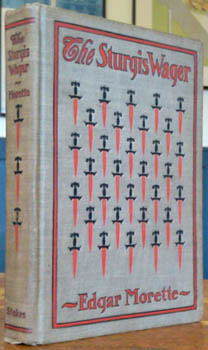
MORETTE, Edgar. The Sturgis Wager. A detective story. NY, Stokes [1899]. Octavo publisher's decorated cloth blocked in red and black. Minor signs of use, a pretty good copy. Au$150
First edition of this fast paced New York murder mystery that opens in the chaos of Broadway traffic. Well before the end of chapter one we have our corpse and three mysteries. Another chapter, more mystery and the bet that gentleman reporter Sturgis can't solve them. Soon enough we enter the realm of scientific fantasy with the criminal genius who has disposed of hundreds of victims and dissolved their remains in his laboratory.
You can email an inquiry or order securely through antiqbook
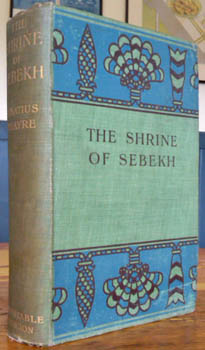
No fly leaf, no cursed monster ... cost price
PHAYRE, Ignatius (ie William George Fitzgerald). The Shrine of Sebekh. London, Constable 1911. Octavo publisher's decorated green cloth (spine tanned). Front fly removed, marring what would have been a pretty good copy. Au$65
Only edition of this furiously ambitious novel set in Texas and Egypt which will disappoint cultists looking for a lost race or re-incarnated queen. It did me. It is a strange book which might reward more attentive readers. Once I figured out there were no giant man-eating scarabs, death cults and hypnotic jewels my interest flagged.
Poor Fitzgerald seems destined to be remembered only for the disgrace of writing a fluff piece in 1938 for Homes & Gardens on Hitler's Bavarian chalet and not for his strenuous 1937 denouncement of Nazidom, 'New Light on the Kulturkampf in Germany' in The Tablet. He wrote two novels - this is the first - and great slabs of journalism and commentary through to the late thirties. Perhaps come the war Ignatius Phayre needed a new identity.
You can email an inquiry or order securely through antiqbook
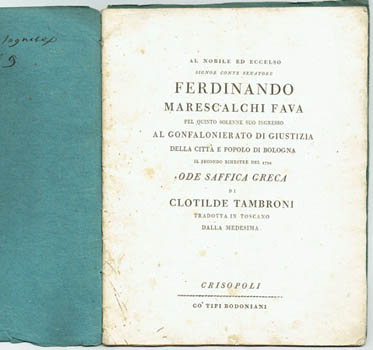
Bodoni Press. TAMBRONI, Clotilde. ... Ode Saffica ... Crisopoli [ie Parma], Co'Tipi Bodoniani 1794. Quarto (original?) plain wrapper; 20pp. A fairly spotty copy with an old vertical fold. Au$30
The title is much much longer but I would have to double the price to justify typing it all. Printed in Greek in an italic font and in Tuscan in familiar Bodoni. Clotilde Tambroni herself is the most interesting part.
You can email an inquiry or order securely through antiqbook
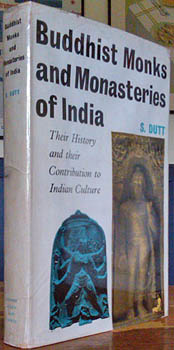
DUTT, Sukumar. Buddhist Monks and Monasteries of India. Their history and their contribution to Indian culture. London, Allen & Unwin 1962. Octavo publisher's cloth and dustwrapper; 398pp, photos, illustrations, plans. Au$40
You can email an inquiry or order securely through antiqbook

Look to the Chinese
COLLIE, Sir John. Fraud in Medico-Legal Practice. London, Arnold 1932. Octavo publisher's cloth (marked and mild signs of use); xii,276pp, illustrations through the text. Au$75
"This work deals with a dark side of human nature, and does not admit of the display of that sympathy which I trust all genuine cases receive". This is based on his earlier work 'Malingering', a much pithier title, and focuses on working (rather than military) malingerers whom Collie investigated. No friend of the unions or the Compensation Act - "there are no malingerers in countries where there is no Workmen's Compensation Act. In China, for instance, ... his family and his neighbours come to his aid ... and I am told that this arrangement works admirably" - Collie was the medical officer or examiner to a number of boards, councils and insurance companies. There are a satisfying number of case studies ranging from the ever popular back pains and hernias to feigned insanity, alleged incontinence and self inflicted injuries.
You can email an inquiry or order securely through antiqbook
THURNWALD, Richard. Economics in Primitive Communities. Oxford University Press for The Institute of African Languages and Cultures 1932. Octavo publisher's cloth; 314pp. Au$50
H. Ian Hogbin's copy.
You can email an inquiry or order securely through antiqbook
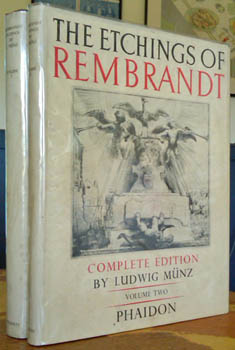
MUNZ, Ludwig. Rembrandt's Etchings. Reproductions of the Whole Original Etched Work. London, Phaidon 1952. Two volumes quarto, very good in publisher's gilt cloth and dustwrappers; hundreds of illustrations. Au$300
Catalogue raisonne. A many titled book. The title above is from the first volume; that of the second is "A Critical Catalogue of Rembrandt's Etchings and the etchings of his school formerly attributed to the master with an essay on Rembrandt's technique and documentary sources". Two further variations are given on the outside and inside of the dustwrappers.
You can email an inquiry or order securely through antiqbook

WESCHER, Herta. Collage. NY, Abrams [1971?]. Quarto, excellent in cloth and dustwrapper; 417pp, 396 illustrations (40 tipped colour). Au$200
First edition in English of this handsome and excellent survey of the first half of the twentieth century. The projected second volume never eventuated.
You can email an inquiry or order securely through antiqbook
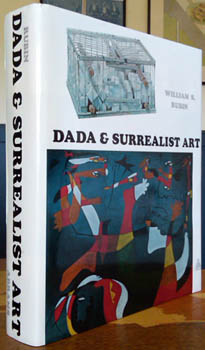
RUBIN, William S. Dada and Surrealist Art. NY, Abrams [1968]. Quarto, excellent in publisher's cloth and dustwrapper; 524pp and 851 illustrations (60 tipped colour). Au$150
There is something reassuringly cultured about the presence on the shelves of these plump handsome art books of the period.
You can email an inquiry or order securely through antiqbook
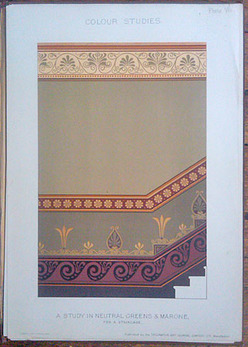
SUTHERLAND, W.G. [William George]. Colour Studies. London, Decorative Arts Journals [1893]. Quarto publisher's decorated cloth (some splitting of the spine); 32 pages of text, 21 pages of publisher's and trade advertisements and 12 colour litho plates (the plates loose as issued). A properly and neatly enough used copy with a few pencil notes about colour schemes on the back of a couple of plates. Au$475
A practical work for painters and decorators with short chapters on colour history by a few experts and detailed descriptions of the proffered colour studies and the pigments used. The Decorative Arts Journal produced a few of these subject specific portfolios, modest in comparison to Sutherland's major works on graining and marbling and signwriting but useful, charming and decidedly uncommon.
Unknown to the dismal
Osborne Books on Colour Since 1500.
You can email an inquiry or order securely through antiqbook